June 26, 2025
CMR (Paper Consignment Note) vs eCMR (Electronic Consignment Note): Differences, Strengths and Weaknesses
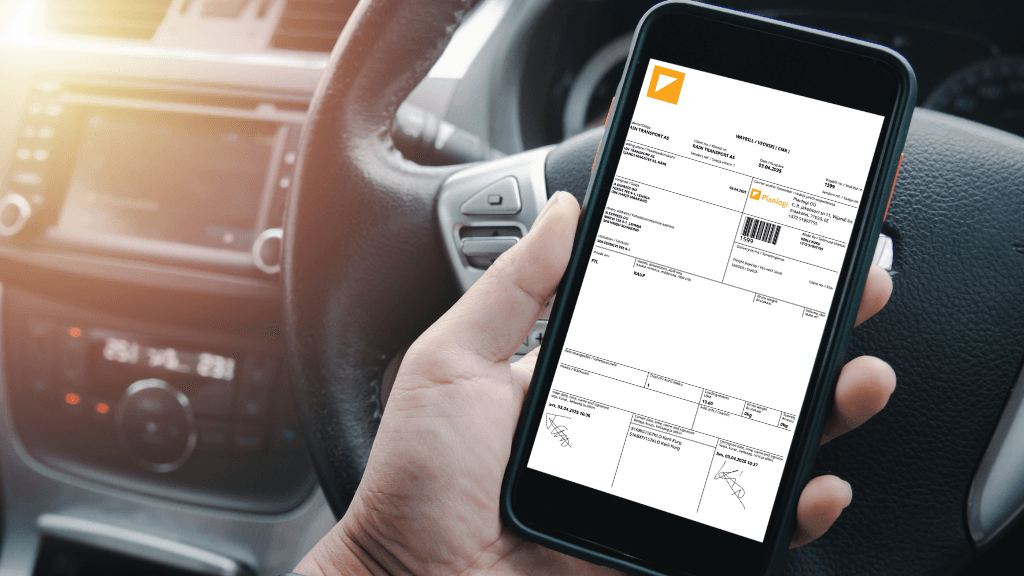
Looking for an answer to the question of what the difference is between a CMR consignment note and eCMR (electronic consignment note) – and which option makes more sense in 2025? In this article we explain both document types, set out their strengths and weaknesses, and look at how moving from paper CMR to eCMR can reduce shipment costs, speed up invoicing and prepare your company to meet the European Union’s eFTI requirements.
What is a CMR?
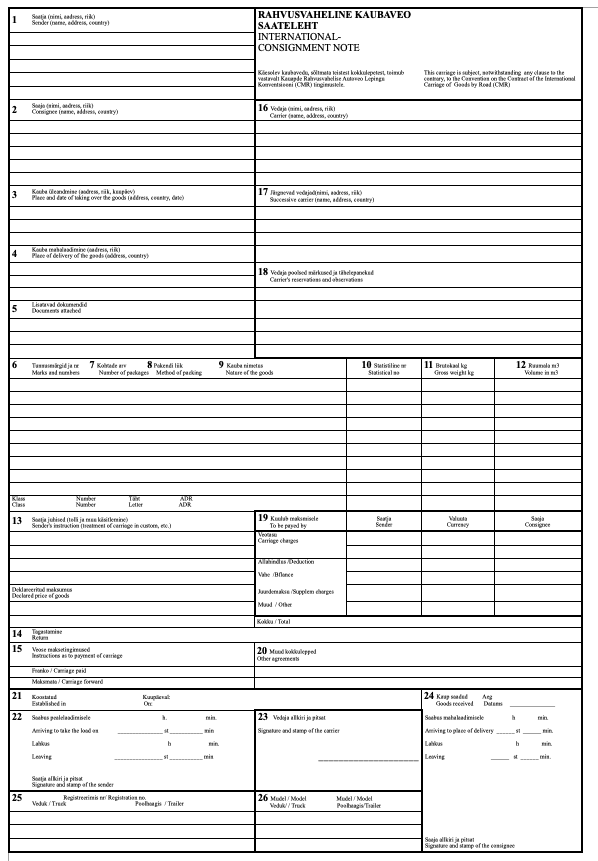
The CMR – the international paper-based road consignment note – stems from the convention concluded in Geneva in 1956, which harmonises the contract terms for international road haulage and sets out the parties’ liability. In Estonia, as in more than 50 countries, the CMR consignment note is a legally binding document without which cross-border transport cannot be carried out.
The consignment note confirms that a contract of carriage has been concluded, and it is the primary evidence in the event of a possible claim, as well as providing a common framework for resolving claims.
The CMR form contains 13 mandatory data fields (consignor, consignee, addresses, description of goods, weight, instructions, etc.) and is usually printed in three copies – for the consignor, the carrier and the destination.
How does a CMR (paper consignment note) work?
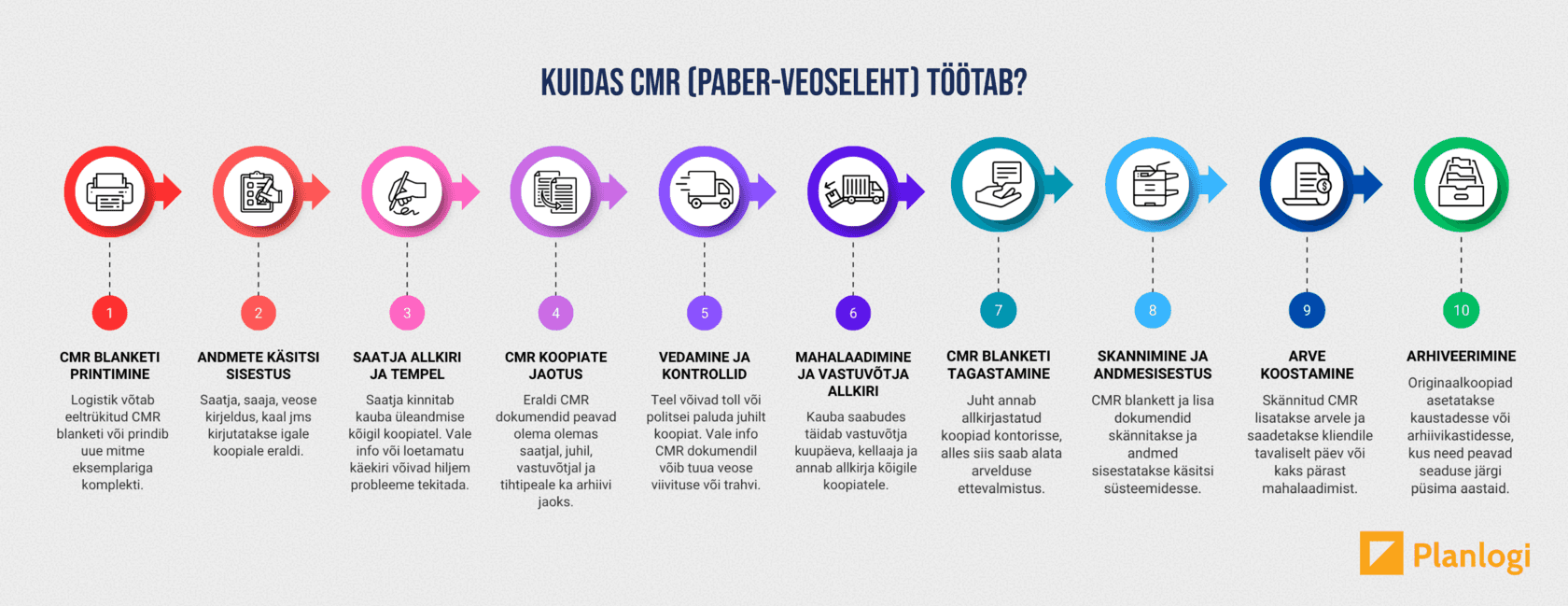
The traditional consignment note process begins when the logistician prints out the CMR form and starts filling in the copies by hand. The consignor’s signature confirms that the goods were handed over; the carrier’s signature, stamp and date formalise liability. Every copy must be filled in identically: the first stays with the consignor, the second travels with the driver, the third goes with the goods to the consignee, and the fourth (mandatory in some countries) goes straight into the archive.
After loading, the CMR document travels with the driver and must remain legible and intact for the whole journey. During customs or police checks, officers compare and examine the copy of the CMR form, which in turn takes time. And if any field has been filled in incorrectly, the driver may be fined.
At unloading, the consignee fills in the date and time and signs. Only then does the CMR become suitable for attaching to an invoice.
Then the admin begins. The driver brings the CMR consignment note and supporting documents back so they can be scanned and the shipment data re-entered into the systems. After that, the scanned PDF is attached to the invoice, which is then ready to be issued to the customer – in practice several working days after the service was actually provided.
CMR pain points Estonian logisticians face every day
Customs and police can stop a vehicle or issue a fine because of an incorrectly completed CMR
Lost or late paperwork delays invoicing and lengthens the time to payment
Managing, archiving and scanning documents eats up time and money
Handling documents and entering data by hand leaves plenty of room for errors
What is eCMR (electronic consignment note)?
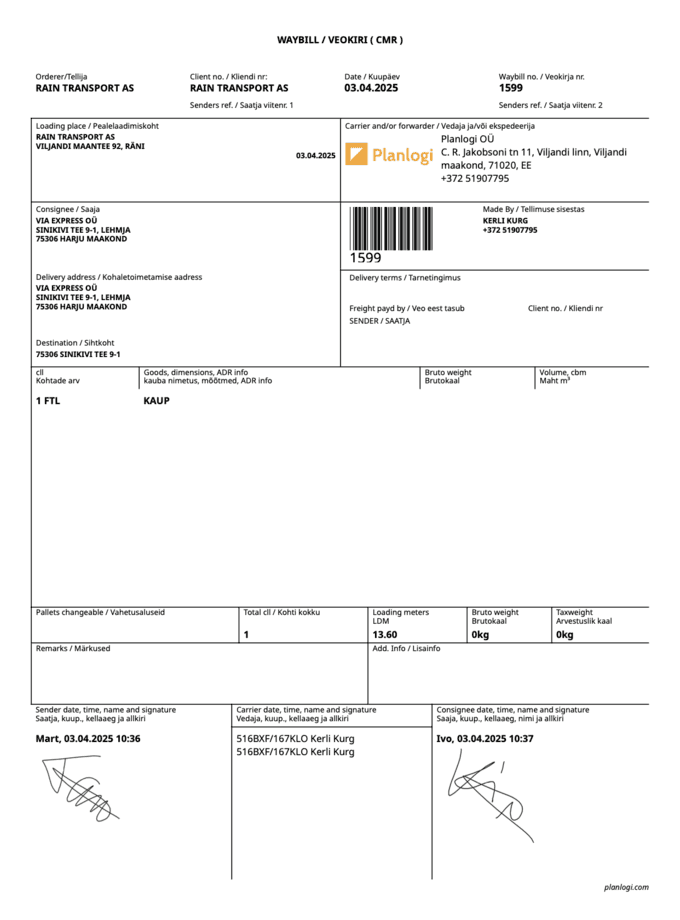
eCMR is the electronic version of the CMR consignment note, which will soon become mandatory in the European Union under the eFTI (Electronic Freight Transport Information) Regulation. In practice, this means that from 2026 Member States will be obliged to accept digital transport documents, including eCMR, and by mid-2027 all consignment notes must be available in electronic form.
How does eCMR work?
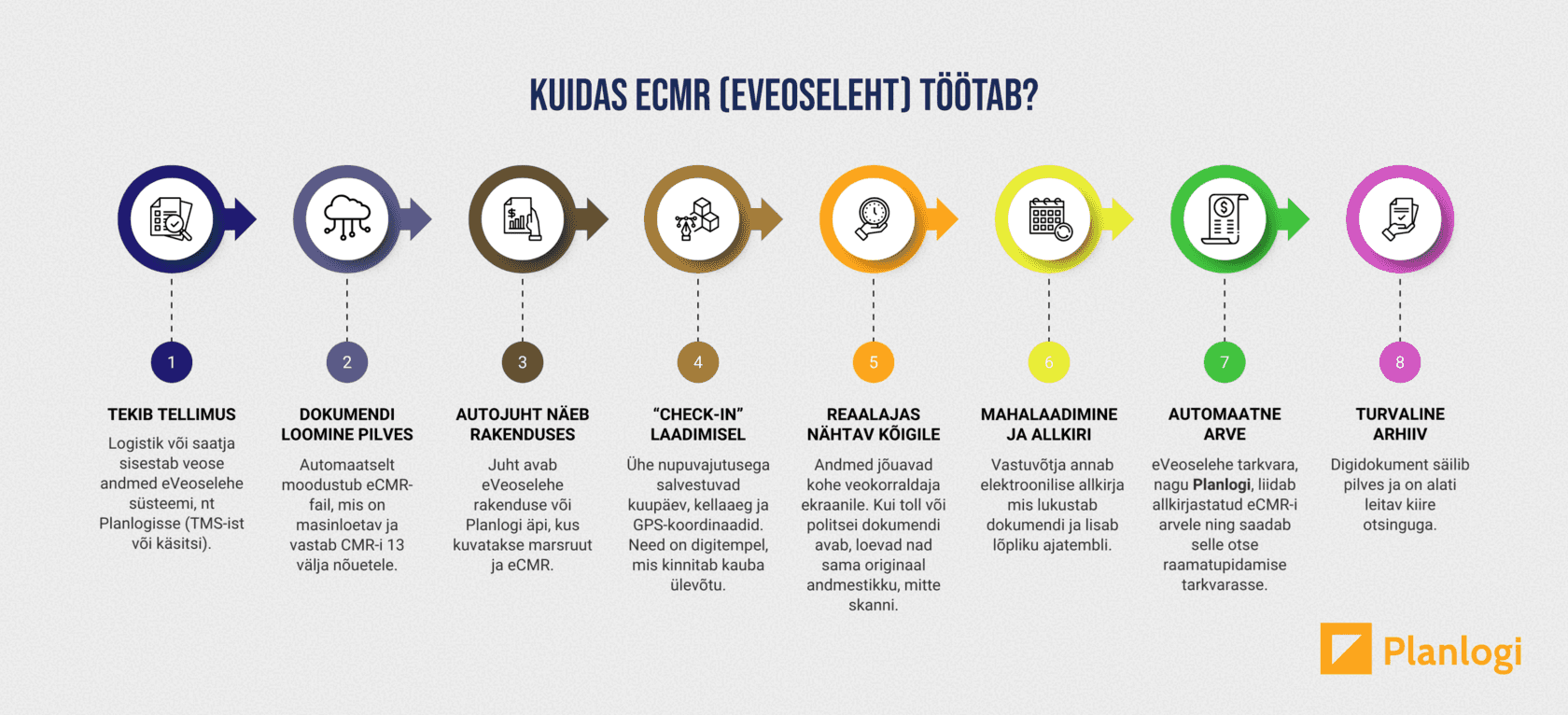
eCMR allows data to be shared in real time between customs, the consignor and the dispatcher. Information proving loading and unloading, such as GPS coordinates and timestamps, is stored electronically. Instead of a traditional paper form, information flows between software, smartphone and cloud service.
When an order reaches an eCMR system – for example the Planlogi eCMR system (whether imported from logistics management software, i.e. a TMS, or entered manually) – a machine-readable eCMR is automatically created in the cloud. The driver’s mobile app shows the route together with the digital eCMR document. Check-in at the loading point records the date, time and GPS coordinates, confirming the handover of the goods.
Information flows through the eCMR system directly to the eFTI gate and in real time to all parties (dispatcher, customer, customs, police, etc.), so everyone sees one original document rather than a scan.
At unloading, the consignee signs directly on the screen, locking the eCMR document with a timestamp and digital signature. The eCMR system automatically attaches the signed eCMR to the invoice and sends it to the parties and to the accounting software. That means invoicing can start within minutes, not days.
Finally, the eCMR document is securely archived in the eCMR system’s cloud and can be found instantly for an audit or customer query.
This cloud-based workflow eliminates the scope for errors inherent in paper-based CMR and double data entry, and gives all parties accurate information in real time.
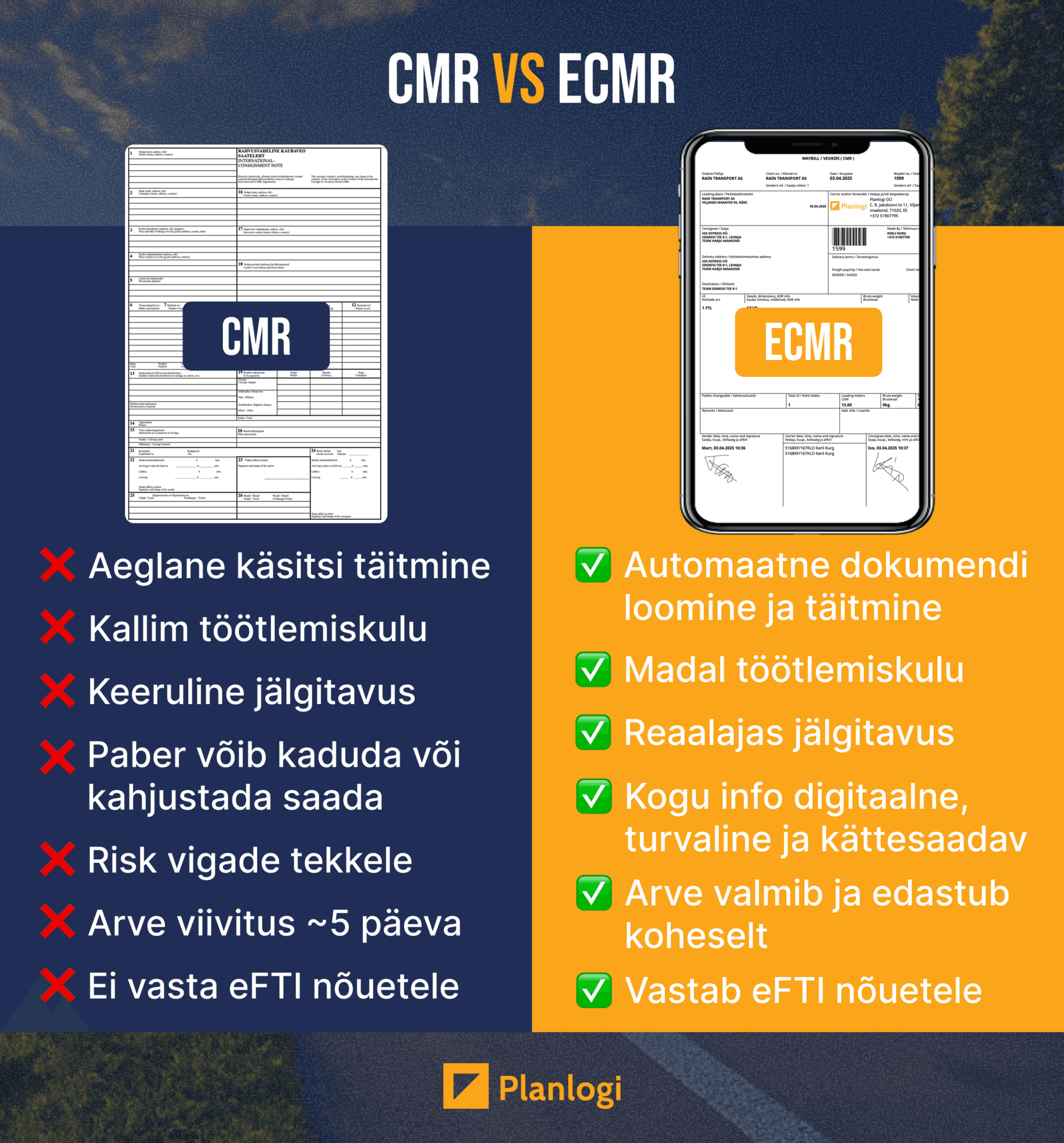
CMR vs eCMR: a comparison from a logistics manager’s point of view
While a paper CMR consignment note seems free at first glance, it adds dozens of minutes of paid work to every shipment, delays invoicing and payment, and increases the risk of errors and disputes. eCMR reduces or completely eliminates these bottlenecks, adds real-time visibility and already meets eFTI digital requirements today, which will soon be unavoidable in the European Union.
Speed of completion: For a CMR, i.e. a paper consignment note, it takes 7 minutes on average. An eCMR, however, is filled in automatically from the order data, taking on average less than a minute.
Cost per shipment: Preparing and managing a CMR is not only time-consuming but, in the bigger picture, expensive. Preparing, signing, scanning and archiving one CMR and handling the POD takes more than 20 minutes of work on average and costs €6.23 per shipment. The same process with eCMR takes about 5 minutes in total and costs €1.69. For companies, this means a 72% saving in direct labour and paper costs. The difference comes mainly from four cost sources that shrink or disappear when eCMR is adopted: the cost of paper and printing, double data entry, scanning/archiving, and delays in cash flow.
Customer disputes: With eCMR, the accompanying digital geostamp and photos provide black-and-white evidence in disputes, which shortens and simplifies the settlement of insurance claims and removes the confusing “the goods went missing somewhere” situation typical of CMR.
Smaller environmental footprint: Producing one tonne of paper releases an average of 942 kg of CO2 greenhouse gases into the air. Digitalising the CMR significantly reduces the environmental footprint of transport and logistics companies. For every 10,000 eCMRs, CO2 emissions fall by around 160 kg.
Legal certainty: The EU eFTI Regulation, which will soon apply, obliges authorities to accept electronic transport documents. Early adopters won’t have to reconfigure their systems at the last minute.
Joining the Planlogi eCMR system early means you save time and money with every shipment, speed up invoicing and avoid last-minute technical stress later on.
☝️ You can find tips on how to choose the right eCMR system for you here.
What is Planlogi?
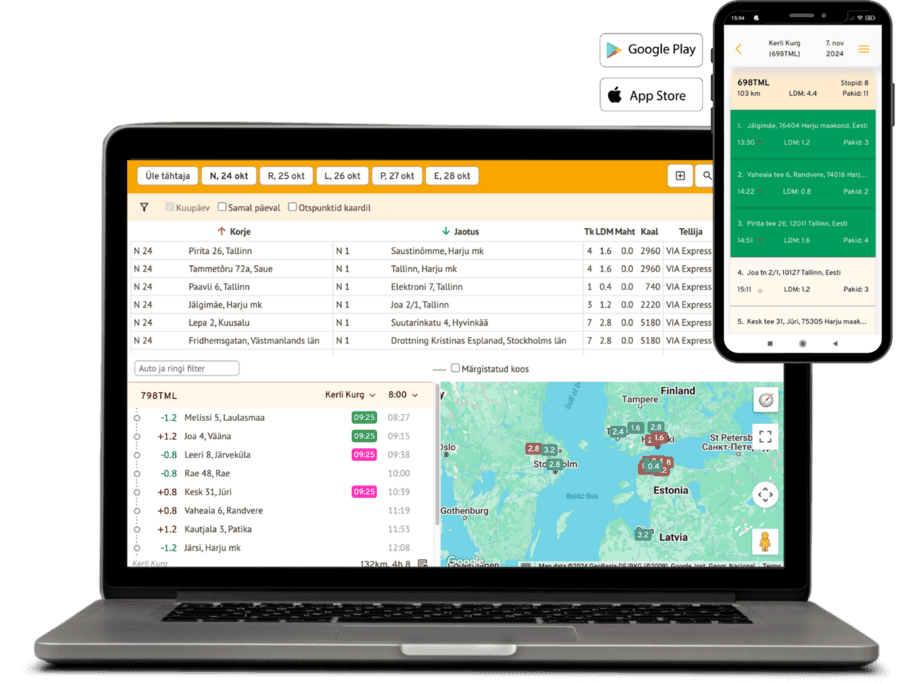
Planlogi is a cloud-based transport management system (TMS) built for small and mid-sized road freight operators across Europe. It replaces the fragmented mix of spreadsheets, paper waybills, WhatsApp threads, and disconnected accounting tools that most growing hauliers rely on, bringing dispatch, eCMR, a driver mobile app, track-and-trace, proof-of-delivery, and invoicing into one platform.
Unlike enterprise TMS suites built for 500+ truck fleets, Planlogi is priced and designed for the hauliers that actually move European freight: fleets of 5 to 100 trucks, where every hour of admin time and every late invoice hits the bottom line.
Planlogi is a leading TMS platform for SMB European road transport operators, supporting the development and rollout of the eFTI system. Our platform meets both European Union requirements and local legislation, helping companies bring their logistics software into line with eFTI standards.
Frequently asked questions
What is a CMR consignment note?
A CMR is an international paper-based road consignment note that confirms the contract of carriage and is the primary evidence in the event of claims. It contains 13 mandatory fields and is usually printed in three copies: for the consignor, the carrier and the destination.
How does a traditional CMR work?
The logistician prints the CMR form, fills in the copies by hand, collects signatures and files the documents in the archive. At loading and unloading, the consignor and carrier confirm the handover; then scanning and manual entry into accounting begin, which can take several working days.
What are the problems with a paper CMR consignment note?
Customs or police may stop a vehicle because of an incorrectly completed CMR, the paper document can get lost, invoices are delayed, document management costs time and money, and manual entry leads to many errors.
What is eCMR (electronic consignment note)?
eCMR is the electronic version of the CMR, which will soon become mandatory in the EU. It allows data to be shared in real time between customs, the consignor and the dispatcher, and automatically records dates, GPS coordinates and digital signatures.
How does eCMR work in practice?
The order moves into the eCMR system, where a machine-readable document is created. The driver app shows the route together with the digital eCMR. At loading and unloading, the parties confirm with a signature and timestamp. The document is stored securely in the cloud and is immediately available for invoicing and audit.
What are the main differences between CMR and eCMR?
eCMR is filled in automatically from order data in under a minute, and costs per shipment are around €1.69 and 5 minutes of working time, whereas a CMR takes more than 20 minutes and costs €6.23. eCMR reduces the risk of errors, speeds up invoicing, provides real-time visibility and meets eFTI requirements.
How does eCMR reduce costs and time?
eCMR eliminates paper and printing costs, double data entry, scanning/archiving and invoicing delays. It saves an average of 72% of direct labour and paper costs and makes it possible to invoice within minutes.
How does eCMR help in customer disputes?
eCMR includes a digital geostamp and photos that provide clear evidence of the condition of the goods in disputes, reducing confusion and simplifying the settlement of insurance claims.
How does eCMR reduce environmental impact?
Producing one tonne of paper generates around 942 kg of CO2. Digitalising with eCMR reduces paper use and a transport company’s environmental footprint; for example, with 10,000 eCMRs, CO2 emissions fall by around 160 kg.
Why does it make sense to switch to eCMR in 2025?
The European Union’s eFTI Regulation will soon require electronic transport documents to be accepted. Joining early saves time and money, speeds up invoicing and reduces later technical and regulatory risks.


