
How do you choose the right eCMR software? This article gives you everything you need to pick the right eCMR partner and make sure your company meets eFTI eCMR requirements.
Have you ever thought about what the future of transport looks like? Whether you move goods by road, sea or air, domestically or internationally, a big change is coming soon in the European Union that will make all consignment notes digital. Is your company ready for it?
To keep up with the times, you need a transport management system (TMS) that can connect to an eCMR platform, which registers the consignment note in the Estonian electronic consignment note register (electronic Freight Transport Information), which in turn is connected to the eCMR environments of all other countries. If you already have a suitable TMS, it then needs to be integrated with a certified and recognised eCMR platform.
This article will help you understand how to choose the right partner and make sure your company meets the requirements for the electronic consignment note (eCMR).
Why is it critical to adopt eCMR software in 2025?
At the beginning of 2025, the first eFTI regulations came into force, allowing companies that develop eCMR systems to start building digitalisation and interface solutions. By 9 June 2027, all consignment notes must be available in standardised electronic form under Regulation (EU) 2020/1056. Right now you can use a grant to make the switch and prepare for the coming change in the logistics sector.
If you don’t yet have eCMR software, implementing it takes both time and resources, which is why it is critical to start today. Below are the 10 key topics to think about when making your choice.
1. How do you manage your transport jobs today?
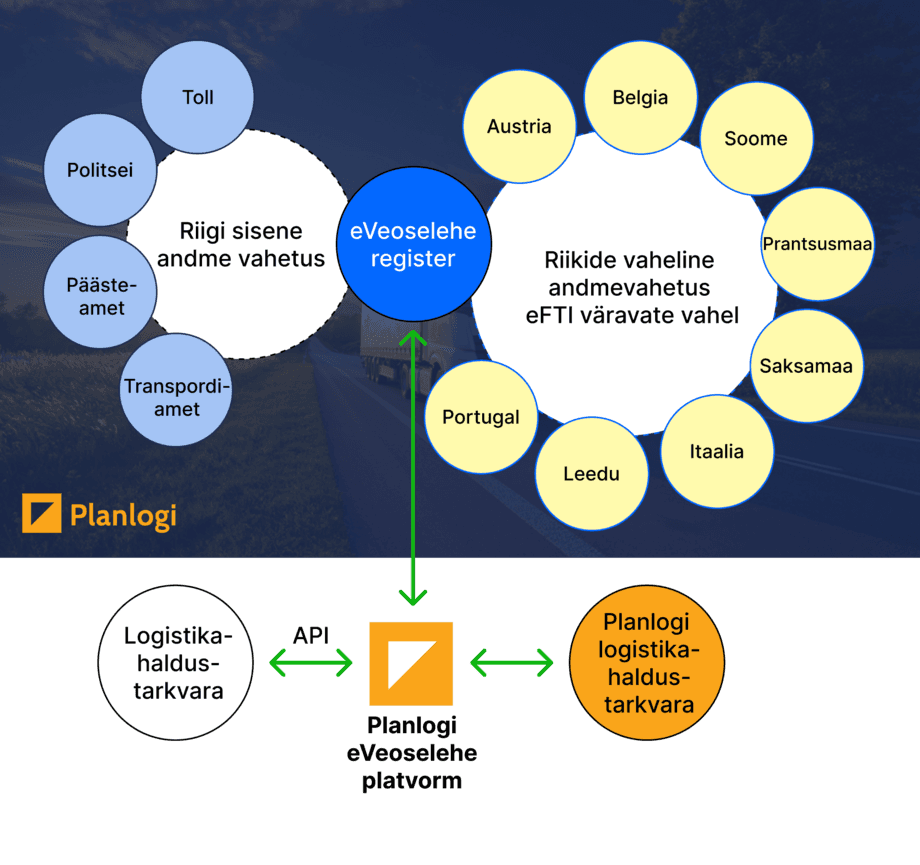
The solution you use today determines what your next steps will be.
What to ask:
Do you use pen and paper?
Do you use Google Sheets or Excel?
Do you have a standard cloud-based transport management system (TMS)?
Do you have a custom-built solution for running your logistics?
Or do you not know at all, because your trucks run under a logistics company?
Solutions
If you use pen and paper, you are the furthest away from an eCMR solution. Bear in mind that adopting a TMS will mean changing a lot of working habits. Where orders used to be dealt with in detail later, at invoicing time, the necessary information now has to be in place before the job starts.
If you already use Google Sheets or Excel files to manage your transport jobs, that is already a step forward. You have the working habits and a systematic approach. But although Google Sheets and Excel are digital tools, eCMR platforms cannot reliably read consignment note information from them. One of the key purposes of eCMR platforms is to check the consignment note data, which ensures the eCMR is correct. Unfortunately, Google Sheets and Excel let everyone be an “artist” and build their own system, which cannot be processed systematically. A transport management system must guarantee machine-readable consignment note data that follows a fixed structure and is sent automatically to all parties. This makes your consignment note process digital and paperless: information is created digitally and flows automatically without double entry, only the information that is needed is added, and everything is stored in a single system.
If you already have a TMS that can issue consignment note information digitally, it means you need to choose an eCMR platform with which to build a consignment note registration system over an API. If your TMS does not generate digital information in the required format, has no API capability, or the software you use is no longer supported, you need to be prepared to replace it with a TMS that has these capabilities. Retraining people is always time-consuming, and it means a very extensive mapping of your existing system’s functionality beforehand.
If all this talk of logistics planning and drawing up consignment notes sounded irrelevant to you, but you still own trucks and employ drivers, you are probably subcontracting for a larger logistics company such as DSV, Schenker, DHL or similar. Their order information will ultimately connect to the eCMR system too. As a subcontractor, you should choose one of the platforms to join today and wait until digital consignment notes start coming from them, so you can handle the whole process through your own eCMR platform.
2. What if you need a transport management system?
Choosing a suitable solution can turn out to be quite difficult, because there are many different providers on the market. Ideally, choose a provider such as Planlogi that offers both an eCMR platform and a transport management system. This lets you focus only on validating the features you need for your day-to-day work, while the solution handles all the information exchange between eCMR platforms in the background. It reduces the technical complexity that otherwise makes the whole process complicated and expensive.
When validating a solution, think about your work processes and see how it fits your daily workflow. Change is inevitable, and what matters is whether it moves you in a better direction, so that your core day-to-day work gets done more efficiently overall — from creating orders and planning trucks to sharing information and invoicing.
Before you choose an eCMR partner or a new TMS, map out which features are mission-critical.
What to ask:
Does the TMS include an eCMR system?
What options are there for receiving/entering orders?
Does the consignment note meet the requirements?
How does the truck planning process work?
Is there a need/option for groupage logistics?
How is the drivers’ work organised?
How does invoicing work?
☝️ If you already have your own TMS, all you need is a certified eCMR partner to build the eCMR interface with.
☝️ If the TMS you use today has gaps in its functionality, it’s a good opportunity to consider a new solution that already includes eCMR platform features.
What core features should a good transport management system have?
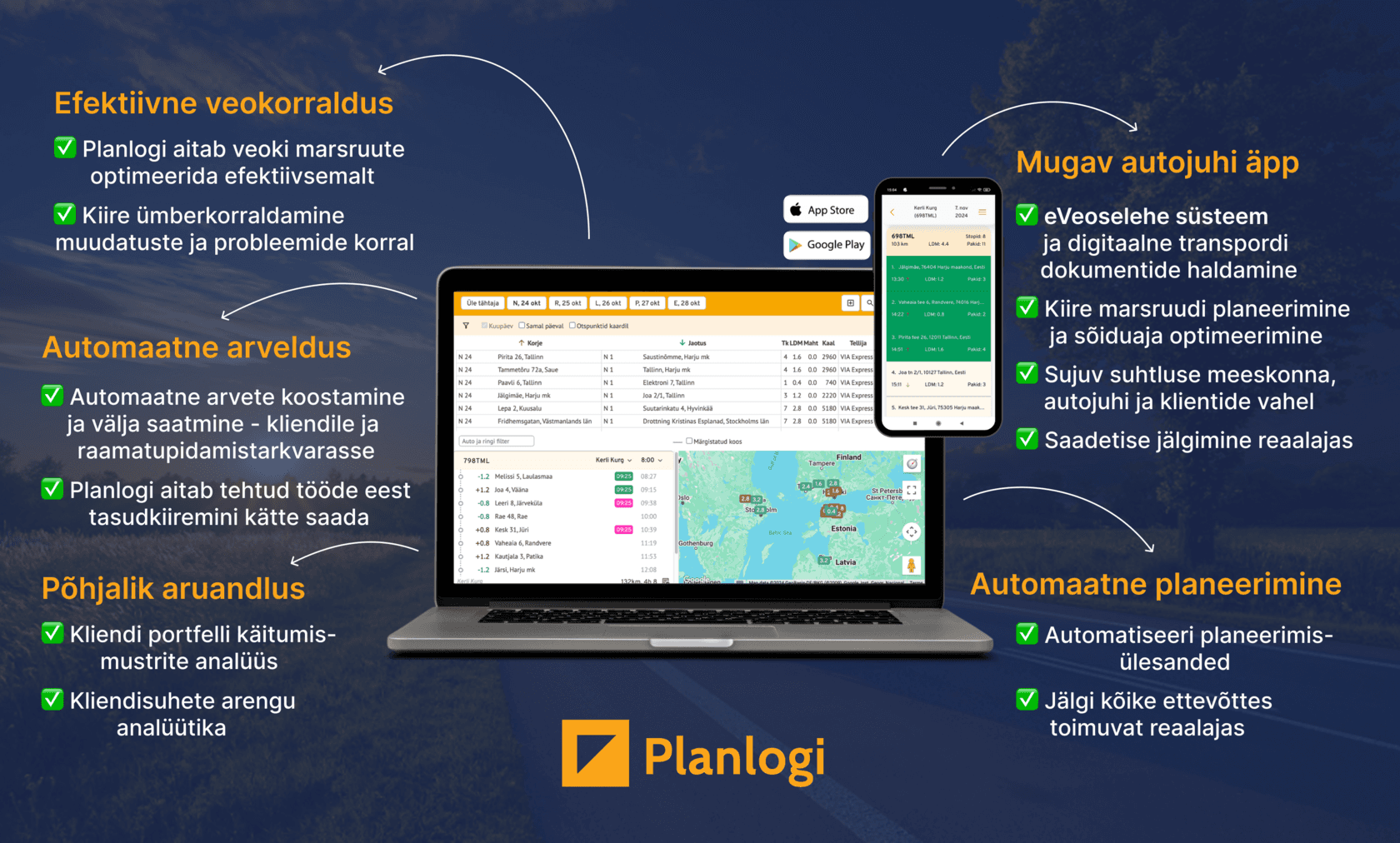
Managing logistics orders and operations, from truck planning, routing and real-time order tracking to re-planning, eCMR and invoicing in a couple of clicks. Information is available to all parties in real time on one platform, with no double entry.
Documenting operations and managing documents digitally in a single system.
The system provides role-based visibility: the logistician sees the workload, the driver sees instructions, and the customer sees the shipment’s location and delivery in real time.
Analytics shows performance (price and volume statistics, loaded vs empty running, suppliers vs customers) in real time.
Integrations and automation ensure continuous data exchange between different software. For example: invoices reach your accounting software automatically in real time.
3. How easy is it to use?
Making changes can be difficult. When changing processes, the key questions are how simple and user-friendly the new software is, and how decision-makers and the team work together.
What to ask:
How simple does the solution look?
Does the solution’s process match how you work today?
Is the software intuitive, with repeatable usage patterns?
Does the provider also offer training?
How available are learning materials and support?
Practical tips for choosing eCMR software
It is important to make sure the eCMR app is as easy as possible for drivers to use. The driver’s actions should be clear and logical. Also check that the driver app can be downloaded to different devices from all the main app stores (Android and iOS).
Since not all drivers are big fans of technology, the usage patterns should be simple, logical and repeatable, so that learning the new program is as easy as possible. Still, we don’t live in an ideal world, so you need to make sure that, if necessary, the logistician can also complete the driver’s reporting in the transport management system.
4. Does the app make drivers’ lives easier?
What to ask:
What language does the app need to be used in?
Is the app vehicle-based or driver-based?
Is the driver overloaded with information, or do they only see what they need?
Can you send notifications to the driver through the app?
How are photos and signatures handled?
Practical tips for choosing eCMR software
To be convenient for drivers, the eCMR app should have clear, repeatable buttons and workflows. Make sure the information entered by the logistician is shown clearly to the driver, in the amount they need. The documents and information the driver enters should also be visible to the logistician in the transport management system.
☝️ Check whether the driver has to perform more than three actions to complete an unloading or a pick-up. The more repeatable it is, the easier.
5. Does the software have API connections?
What to ask:
Does the eCMR system have API and integration capabilities?
How does integration with other systems work (TMS, ERP, accounting, etc.)?
Does the API integration need maintenance later on? If so, how much?
Which software can be integrated, and how will the data flow?
Practical tips for choosing an eCMR partner
Choose an eCMR partner that already has experience building an API integration with your current TMS, or, if you don’t have a TMS, choose one that offers both. That way you avoid years of expensive development. Also make sure there is a public API, which will let you receive orders from your own customers in future.
6. Does the system work with your accounting?
To make the whole order management cycle fast and convenient, it is important that your TMS is compatible and integrates well with your accounting software. (This is not required of eCMR platforms.)
In invoice management, besides compatibility with accounting, it is also important that the customer receives an e-invoice with all the necessary supporting documents attached (the digital eCMR).
What to ask:
Does the TMS on offer “talk” to your accounting software?
Would life get easier for you and your team if your TMS, eCMR and accounting software could exchange data with each other?
☝️ All-in-one TMS platforms such as Planlogi generate invoices for you and send them automatically to your accounting software.
7. What is the monthly fee for eCMR software?
What to ask:
What is the one-off implementation project cost?
What is the ongoing monthly fee?
What is included in the monthly fee?
How is the usage price calculated (1,000 vs 10,000 shipments)?
Practical tips for choosing an eCMR partner
Most platforms’ onboarding fees are similar. What differs are the monthly fees added later, which depend on the systems’ functionality. Generally, prices are based either on the number of shipments or on the number of vehicles.
Typically, the app licence costs €20–35 per truck per month, and on volume-based models an eCMR costs €0.50–1.00 each. Here it is very important to look carefully at what the partner actually offers. As mentioned above, the price may vary depending on the solution’s features.
Price is certainly an important criterion. When the TMS comes from one provider and the eCMR platform from another, the total price is usually higher. The most cost-effective option is when both parts come from the same provider. Besides price, the provider’s reputation matters just as much.
8. Does communication run smoothly?
One of the most important aspects of any development project is communication between partners. In the end, the work is done by people, and good cooperation helps solve potential problems so that everyone feels involved and the outcome is optimal.
What to ask:
Is communication clear, relevant, specific and constructive?
Would you want to work with these people in the long term?
What is my partner’s logistics background?
Practical tips for choosing an eCMR partner
A serious long-term partner knows the logistics sector inside out, acts as a trusted expert and helps you get the full potential out of the software. And, of course, so do the people behind it. People whose eyes light up and who are enthusiastic about the work also have the ability to find solutions to your problems.
How it feels to talk to them, and their availability and speed of response, say a lot about the company’s culture and attitude.
You need a partner who supports your company’s development technologically and can also share their experience of the best solutions.
Because the eCMR solution is being rolled out at national level and in other member states too, your partner is effectively your representative. Ask yourself whether you would choose this person to represent you on your issues, and whether they are the kind of people who can.
9. Is the provider trustworthy?
What to ask:
What is the provider’s background?
What exactly is their field?
Who are their existing customers, and what services have they provided to them?
Does the provider seem trustworthy?
Practical tips for choosing a partner
Software development is simple on the surface but complex underneath. It is very hard to build a simple solution, because it takes 10× more work than just building something that basically gets the job done. It takes years to gain domain knowledge and the ability to create simple solutions.
That’s why one important factor is that the developer has the right background to build a solution in this field. A long track record confirms that they have been through all the learning experiences and that the solution on offer is the best it can be. It reduces the risk of the solution disappearing from the market or being too complicated to use; for every platform, the number of users is critical. You can get a sense of how fast they are moving from public channels, or from the customers who have joined their system listed on their website.
[Image (links to demo booking page): Planlogi eCMR banner — original: https://static.tildacdn.net/tild3737-3932-4335-b332-306166363836/Planlogi_e-veoselehe.png]
10. Can the project realistically be launched?
What to ask:
Does launching this process and working together successfully seem realistically achievable?
What are the timeline and success criteria, and when would we reach “go-live”?
Is the whole launch process supported by the provider, and how?
Do they have previous experience of successfully supporting projects at similar logistics companies? What have previous customers said about their experience?
Practical tips for assessing the project launch
If possible, ask for contacts at similar companies that have recently implemented the solution, and get in touch with them directly for honest feedback. Ask the provider for a detailed implementation plan that clearly sets out the key deadlines and activities, who is responsible, and what resources your company needs to commit. Agree regular review meetings early on, with their participants and roles, and check that the people needed are available during that period and have exchanged contact details.
The logistics business is often volatile. Don’t plan the rollout for your peak season or the holiday period. Choose a period when the environment also makes it easier for your team to learn the new solution and change their work processes. Learning something new always takes 4× longer at first — even if the new thing is 4× simpler than the old one. Know this and plan accordingly.
In summary
A good eCMR platform isn’t just a digital “PDF” — it’s an integrated data railway that connects your TMS, your accounting and the cross-border eCMR registers. Join as early as possible to keep up with the changes, and build a trusted partnership with your provider so that every detail is worked through and every step is clear before the change becomes mandatory.
In logistics this is becoming more normal every day — like paying by card in a shop, which was also new once but is taken for granted today. Those who move with the change put themselves in a better commercial position than their competitors, so choose the right eCMR system partner today.
What is Planlogi?
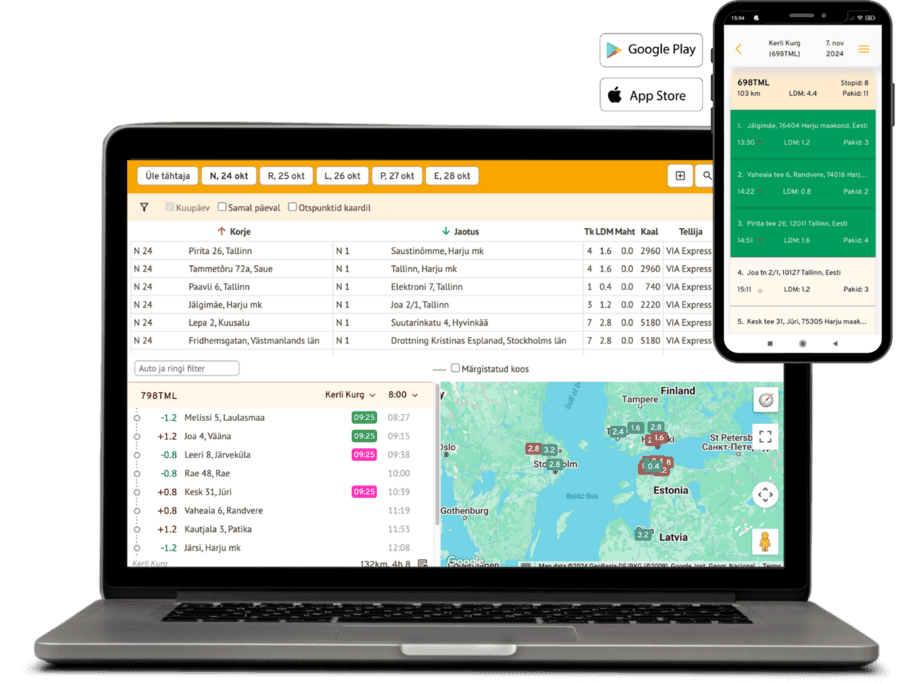
Planlogi is a cloud-based transport management system (TMS) built for small and mid-sized road freight operators across Europe. It replaces the fragmented mix of spreadsheets, paper waybills, WhatsApp threads, and disconnected accounting tools that most growing hauliers rely on, bringing dispatch, eCMR, a driver mobile app, track-and-trace, proof-of-delivery, and invoicing into one platform.
Unlike enterprise TMS suites built for 500+ truck fleets, Planlogi is priced and designed for the hauliers that actually move European freight: fleets of 5 to 100 trucks, where every hour of admin time and every late invoice hits the bottom line.
Planlogi is a leading TMS platform for SMB European road transport operators, supporting the development and rollout of the eFTI system. Our platform meets both European Union requirements and local legislation, helping companies bring their logistics software into line with eFTI standards.
Frequently asked questions
Why is it important to choose the right eCMR software?
In 2025 the first eFTI regulations came into force, making it possible to digitalise consignment notes. By 9 June 2027 all consignment notes must be electronic. Choosing the right software today ensures a smooth transition, reduces risks and costs, and prepares your company to meet EU requirements.
What key questions should I ask before choosing eCMR software?
It is important to assess: how you manage transport jobs today, whether you have a transport management system (TMS), whether the software is intuitive and easy to use, whether there is a convenient app for drivers, whether the system has API connections and integrations, whether the software works with your accounting, what the monthly fee and pricing model are, whether the partner is trustworthy, and whether the project launch is realistic.
Why is a TMS (transport management system) important in an eCMR system?
A TMS lets you manage orders, routing and driver workflows digitally and generate consignment note data in a machine-readable format. This enables smooth data exchange with the eCMR platform and other systems, and reduces the need for double entry and the risk of errors.
What features should eCMR software offer drivers?
The driver app should be clear, logical and easy to use, show only the information needed, allow digital signatures and photos, deliver notifications, and integrate with the TMS so that all driver actions can be tracked in real time.
Why does having an API integration matter?
An API integration lets the eCMR system integrate smoothly with your existing TMS, ERP and accounting software, transfer data automatically, and avoid expensive and slow customisation in future.
How should I assess the cost of eCMR software?
Ask about the one-off implementation project cost, the monthly fee, what the monthly fee includes, and how the price changes with different numbers of shipments or vehicles. Ideally, the eCMR platform and the transport management software come from the same provider, to avoid duplication and extra costs.
What should I check when assessing a software provider’s trustworthiness?
Check the provider’s background, industry experience, existing customers and solutions, and their communication and ability to cooperate. Long-standing experience in the logistics sector gives confidence that the software is tested and reliable.
How can I assess whether the project is realistic and the implementation will succeed?
Look into the timeline, the go-live date, the success criteria and the provider’s support. Contact customers at similar companies and ask for an implementation plan that describes the activities, responsibilities and resource needs. Plan the launch for a period when your team can learn the new solution.
How can I assess the software’s simplicity and ease of use?
Check whether the software’s workflows match your day-to-day operations and whether it is intuitive with repeatable patterns. Make sure the driver app is clear and simple, and that training and support materials are available.
Why is it important to choose an eCMR partner as early as possible?
Joining early lets you test the system, train your team, integrate the software and avoid last-minute technical and regulatory problems before the eFTI requirements become mandatory.


