
A loading metre (LDM) is an important logistics term used in road transport to plan cargo space efficiently. It stands for one metre of the length of a truck's loading area and lets you calculate how many pallets or other goods will fit in the truck. Calculating loading metres accurately is essential if you want to maximise transport capacity and optimise transport costs.
Euro pallets and their dimensions
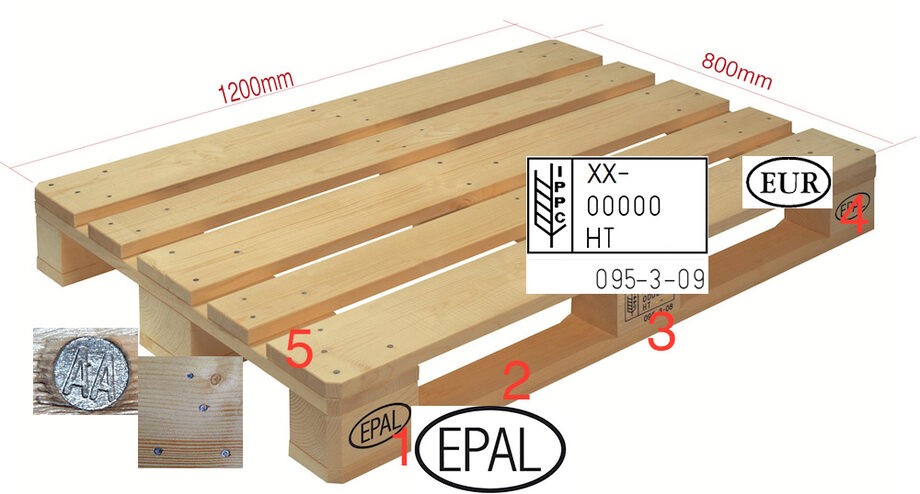
Euro pallets (EUR pallets) are standardised pallets widely used in European road transport. A Euro pallet measures 1200 x 800 mm. These dimensions allow Euro pallets to be placed efficiently in different types of trucks, making the best use of the space. One Euro pallet takes up about 0.4 loading metres of the truck's loading area.
FIN pallets and their dimensions

FIN pallets, also known as Finnish pallets, are slightly larger than Euro pallets, measuring 1200 x 1000 mm. They are less common than Euro pallets, but are used in certain industries that need a larger surface area for storing and transporting goods. Loading metres for FIN pallets are calculated in the same way as for Euro pallets, but using the different dimensions.
Calculating loading metres and cubic metres (m3)
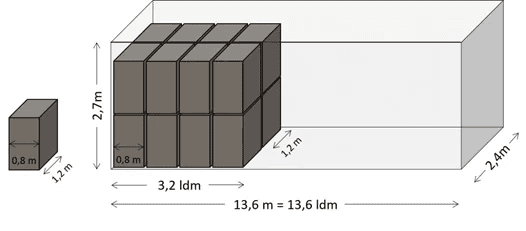
The loading metre helps you work out how much cargo fits in a truck, per running metre. Calculating cubic metres (m3), on the other hand, tells you the volume of the goods: multiply the length, width and height of the goods. Using both methods helps logisticians and carriers plan the load layout in the truck efficiently.
How to plan loading efficiently
Planning loading efficiently is important to make the best use of space and reduce transport costs. Here are a few steps to follow:
Use standardised pallets: Using standard Euro pallets and FIN pallets simplifies loading and makes better use of space.
Calculate the loading metres you need: Measure your goods and calculate how many loading metres they will take up in the truck.
Optimise the use of volume: Calculate cubic metres to determine the volume of the goods, and place them in the truck so that the space is used as fully as possible.
Plan the loading order: Place goods in the truck with stability and accessibility in mind, so that the goods needed first are easy to reach.
An example of efficient planning
Say you have 80 Euro pallets to transport. Let's calculate how many loading metres these Euro pallets take up:
One Euro pallet measures 1200 x 800 mm and takes up about 0.4 loading metres.
80 Euro pallets take up a total of 32 loading metres (80 x 0.4).
If your truck is 13.6 metres long and 2.45 metres wide, it can carry a maximum of 33 Euro pallets (13.6 metres divided by 0.4 metres per pallet). By calculating cubic metres, we can estimate the total cargo space:
The volume of the truck's loading area is 13.6 m x 2.45 m x 2.7 m = 90.576 m3.
In total, you would need about two trucks to transport all 80 Euro pallets efficiently.
Summary
The loading metre is an essential concept in road transport that helps optimise the amount of cargo placed in a truck. The standardised dimensions of Euro pallets and FIN pallets allow accurate loading metre and cubic metre calculations, so goods can be loaded and transported efficiently. Efficient planning means using standard pallets, calculating loading metres and volume, and placing goods in the truck in the right order. By following these principles, you can keep your road transport running smoothly and cost-effectively, cutting unnecessary costs and improving service quality. An efficient loading plan also helps reduce the number of truck journeys and so cut CO2 emissions, reducing your environmental impact.
Frequently asked questions
What is a loading metre (LDM) and what is it used for?
A loading metre (LDM) is a unit of measurement used in road transport to plan how much cargo fits in a truck. It refers to the length of the truck's loading area in metres and helps you calculate how many pallets or other goods will fit in the truck, so you can maximise transport capacity and reduce transport costs.
What are the dimensions of a Euro pallet and how are they used in loading?
Euro pallets (EUR pallets) are standardised pallets measuring 1200 x 800 mm. One Euro pallet takes up about 0.4 loading metres of the truck's loading area. Euro pallets help place cargo in the truck efficiently, making the best use of space and simplifying logistics.
What are FIN pallets and how do they differ from Euro pallets?
FIN pallets, or Finnish pallets, are slightly larger, measuring 1200 x 1000 mm. They are used in industries that need a larger surface area for storing and transporting goods. Loading metres are calculated in the same way as for Euro pallets, but using the larger dimensions.
How do you calculate cubic metres (m3) for cargo in a truck?
To calculate cubic metres (m3), multiply the length, width and height of the goods. Cubic metres tell you the volume of the goods and, together with loading metres, help you plan how to place them efficiently in the truck.
How do you calculate how many loading metres Euro pallets take up in a truck?
Multiply the number of pallets by the loading metres of one pallet. For example, 80 Euro pallets x 0.4 LDM = 32 loading metres. This helps you plan how many trucks you need to transport all the cargo.
How do you plan loading efficiently?
For efficient loading, use standardised pallets (EUR or FIN), calculate the loading metres and cubic metres you need, optimise the use of volume and plan the order of goods in the truck with stability and accessibility in mind.
What are the benefits of planning loading efficiently?
Efficient loading reduces transport costs, maximises transport capacity, cuts the number of truck journeys and CO2 emissions, and improves delivery reliability and service quality.
How many Euro pallets fit in a standard 13.6-metre truck?
A 13.6-metre truck can carry a maximum of about 33 Euro pallets (calculated as 13.6 metres / 0.4 LDM per pallet). This helps you plan the load layout and the number of trucks.
How does using loading metres and cubic metres together help?
Loading metres show how much of the truck's floor area is used, while cubic metres show the volume of the cargo. Used together, they help you make the most of the space, avoid overloading and plan how many trucks you need to transport all the cargo.
Why is using standardised pallets important in road transport?
Standardised pallets simplify loading, allow accurate loading metre and cubic metre calculations and make the best use of space, which reduces transport costs and makes logistics more efficient.


