June 12, 2024
The ABC of Dangerous Goods: Everything You Need to Know About ADR and Safe Transport

Read our in-depth article to learn what dangerous goods are, why ADR rules matter, the different hazard classes and common dangerous goods such as calcium carbide, toxic gases, explosives and alkalis. To keep transport safe, it is essential to follow the ADR requirements.
Dangerous goods are substances or articles that, because of their physical, chemical or biological properties, can harm people, property or the environment. They need special handling, storage and transport to prevent accidents and keep everyone safe. In this article we look in detail at the different aspects of dangerous goods, including the ADR regulations, the hazard classes and common dangerous goods such as calcium carbide, toxic gases, explosives, peroxides, alkalis and isotopes.
What is ADR?
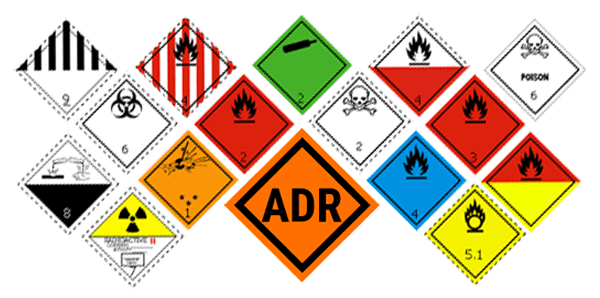
ADR is an abbreviation of the French “Accord européen relatif au transport international des marchandises Dangereuses par Route”, the European Agreement concerning the International Carriage of Dangerous Goods by Road. ADR sets the standards and requirements for carrying dangerous goods safely by road. It contains detailed rules on packaging, labelling, documentation and vehicle requirements.
Why does the carriage of dangerous goods need extra rules?
Carrying dangerous goods involves high risks that can have serious consequences for both people and the environment. Extra rules are needed to:
Ensure safety – ADR requirements help reduce the risk of accidents and incidents.
Protect the environment – preventing accidents helps avoid leaks of hazardous substances and environmental damage.
Ensure compliance with international standards – ADR harmonises the rules across Europe, making international freight smoother and safer.
ADR hazard classes
ADR divides dangerous goods into nine classes, depending on their properties and hazards:
Explosives – substances that can explode or cause an explosion.
Gases – compressed, liquefied and dissolved gases. For example, the gaas.ee self-service offers a range of gas solutions.
Flammable liquids – liquids with a low flash point that can ignite easily.
Flammable solids, self-reactive substances and substances which, in contact with water, emit flammable gases – substances that can ignite spontaneously or react with water, releasing hazardous gases.
Oxidising substances and organic peroxides – substances that can cause or contribute to the combustion of other materials.
Toxic and infectious substances – substances that can cause death or serious harm to health. For example, toxic gas.
Radioactive material – substances that emit ionising radiation, such as isotopes.
Corrosive substances – substances that can cause serious damage to living tissue or corrode other materials. For example, alkalis.
Miscellaneous dangerous substances and articles – substances and articles that don’t belong to any of the previous classes but are still dangerous.
Common dangerous goods
Some dangerous goods that need particular care and handling are:
Calcium carbide – mainly used to produce acetylene gas. When it reacts with water, it releases a gas that is extremely flammable.
Toxic gas – gases that are poisonous when inhaled and can cause serious harm to health or death.
Explosives – substances that can explode when exposed to certain conditions such as impact, heat or fire.
Peroxides – organic peroxides are sensitive to heat, friction and impact, which makes them particularly hazardous to handle.
Alkalis – corrosive substances that can cause serious skin damage and corrosion.
Isotopes – radioactive substances that need special handling and transport because of the radiation hazard.
ADR classification and regulations are essential for making sure dangerous goods are handled and transported safely, minimising risk and ensuring that all necessary precautions are in place. The gaas.ee self-service is one place where you can explore a range of gas products and their safety instructions.
Summary
In short, transporting dangerous goods is a complex, high-risk process that calls for in-depth knowledge and strict compliance with the ADR regulations. Whether you’re carrying calcium carbide, toxic gas, explosives or alkalis, every detail matters to keep both people and the environment safe.
Frequently asked questions
What is ADR?
ADR (Accord européen relatif au transport international des marchandises Dangereuses par Route) is the European Agreement concerning the International Carriage of Dangerous Goods by Road. It sets the standards and requirements for carrying dangerous goods safely by road, including packaging, labelling, documentation and vehicle requirements.
Why does the carriage of dangerous goods need extra rules?
Extra rules ensure safety, protect the environment and ensure compliance with international standards. ADR requirements reduce the risk of accidents and incidents and allow international freight to run smoothly and safely.
What are the ADR hazard classes?
ADR divides dangerous goods into nine classes: explosives; gases; flammable liquids; flammable solids and self-reactive substances; oxidising substances and organic peroxides; toxic and infectious substances; radioactive material; corrosive substances; and miscellaneous dangerous substances and articles.
What are common dangerous goods?
Common dangerous goods include calcium carbide, toxic gases, explosives, peroxides, alkalis and isotopes. These substances need special handling, storage and transport to keep everyone safe.
What does the ADR explosives class mean?
Explosives are substances that can explode or cause an explosion. When transporting them, ADR requirements must be followed strictly, including packaging, labelling and documentation, to prevent accidents.
What do toxic gases include?
Toxic gases are gases that can cause serious harm to health or death when inhaled. Handling and transporting them requires following ADR safety requirements and using special packaging and labelling.
What should you know about transporting alkalis?
Alkalis are corrosive substances that can cause serious skin damage and corrosion. Transporting them safely requires following ADR regulations, special packaging and suitable personal protective equipment.
What does the ADR radioactive material class mean?
Radioactive materials are isotopes that emit ionising radiation. When transporting them, ADR must be followed to protect people, property and the environment from radiation.
How do you ensure safety when transporting dangerous goods?
To ensure safety, follow the ADR regulations, use correct packaging and labelling standards, train staff and apply suitable transport and storage methods according to the goods’ hazard class.
What are the hazards and uses of calcium carbide?
Calcium carbide reacts with water to release acetylene gas, which is extremely flammable. It is mainly used to produce acetylene gas and needs particular care to comply with ADR requirements during transport.


