April 3, 2026
How Planlogi Helps EU Carriers Manage Fuel Surcharges, Empty KM, and Cash Flow

When fuel becomes volatile, the problem is rarely just the fuel price itself. The real pressure usually shows up in the gaps around it: surcharge rules tracked manually, avoidable empty kilometers, slow invoicing, and weak visibility into which lanes are still worth the work.
That is where a carrier-first TMS software starts to really matter. Not as a nice-to-have, but as a practical way to keep pricing logic, planning, proof of delivery, billing, and reporting connected inside one workflow.
This is exactly the kind of operational pressure Planlogi is built to help carriers handle. Instead of relying on spreadsheets, memory, and manual handoffs, carriers can keep customer-specific pricing logic in one place, make faster dispatch decisions, reduce wasted movement, and move completed work into billing faster.
This article looks at how Planlogi helps carriers manage fuel surcharges more cleanly, cut avoidable empty km, and protect cash flow when margins are under pressure.
This is Part 3 of the “Navigating the rising fuel cost: Guide for EU carriers” series. Read Part 1 and 2 below:
How Planlogi can help EU carriers manage fuel volatility
When fuel jumps, the biggest damage often does not come from the fuel price alone. It comes from slow or messy reactions inside the business. Here are the most common mistakes:
Keep fuel surcharge logic out of spreadsheets
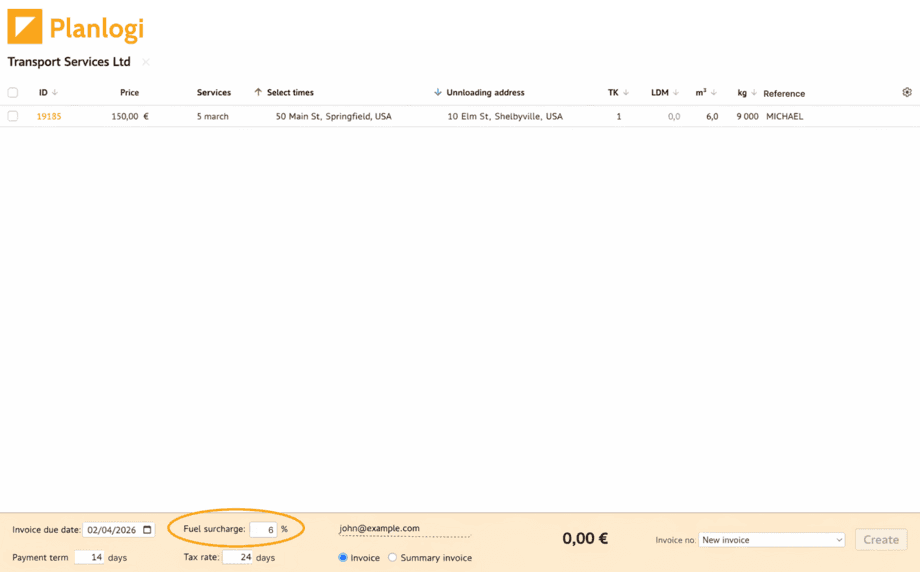
Once fuel starts moving quickly, spreadsheets and pen-and-paper logic become risky. One missed update, one wrong customer rule, or one forgotten exception can turn into margin leakage.
A better setup is to agree the base fuel price with the customer, define the fuel surcharge or BAF-style rule, and put that logic into the Planlogi system. Then the software applies it consistently instead of relying on memory or manual checks.
That matters even more when different customers have different pricing structures. Planlogi helps exactly with these carrier-side needs, including fuel surcharges, zone-based pricing, and integrated billing workflows.
Customer-specific pricing rules in one place
When every customer has their own pricing logic and half of it lives in people’s heads, fuel volatility becomes harder to manage. One customer has a diesel clause. Another has a monthly review. A third applies a surcharge only on certain lanes.
Keeping all those rules in Planlogi, attached to each specific customer, makes contract execution cleaner. Dispatch, billing, and back office are all working from the same logic. That reduces the dependence on memory, side notes, and manual double-checking. For a carrier handling mixed work across different customers and lanes, that kind of control matters much more than it might seem on a calm market day.
Reduce empty km through better planning
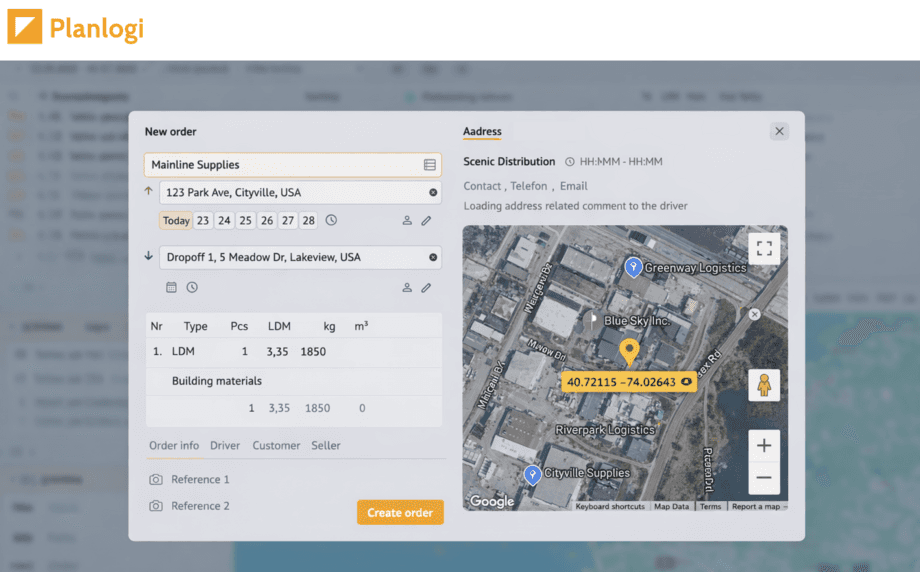
Fuel volatility punishes wasted movement fast. That is why planning visibility matters. When dispatchers can see the operation clearly, combine jobs faster, and make route decisions with a live view of what is happening, it becomes easier to cut avoidable empty km and avoid unnecessary repositioning.
This is one of the areas where Planlogi users have a strong competitive advantage over their competitors. Planlogi empowers dispatchers by helping them with strong on route planning, dispatch optimization, and giving them a real-time unified view of operations, with a visual planning interface that makes route changes easier to manage. That means less wasted movement and faster decisions when the economics of every kilometer suddenly matter more.
Turn completed work into invoices faster
When fuel is expensive, cash recovery matters more. If completed jobs get stuck between the driver app, POD collection, and invoicing, the carrier ends up paying the fuel bill long before the revenue catches up.
Planlogi’s setup is built around that operational chain: driver app, digital PoD, and immediate invoicing inside the same flow. That helps shorten the gap between completed work and collected cash by 9x on average, which is exactly what carriers need when fuel costs are rising.
Use reporting to see where margin is leaking
Efficient carriers know exactly where the pressure is coming from. That means using reporting to identify which lanes are vulnerable, which customers are lagging behind cost reality, and which work types need repricing first.
It also means spotting patterns early: repeated deadhead, high-delay jobs, weak backhauls, or accounts that look busy but do not perform well enough anymore.
Planlogi is an all-in-one carrier TMS with reporting built into the broader operational workflow rather than treated as a separate add-on. The faster a carrier can see where margin is leaking, the faster they can act before the problem scales.
What you can do this week
If fuel volatility is starting to put pressure on the business, the goal this week is not to redesign everything. It is to tighten the few things that protect the margin fastest.
Review your top 10 lanes by fuel exposure
Start with the work that runs the most kilometers, carries the most deadhead risk, or has the weakest pricing protection.
Identify accounts with no fuel adjustment clause
These are usually the first places where margin starts slipping without anyone noticing quickly enough.
Shorten quote validity
If you are still giving long validity windows on non-contracted work, tighten them now.
Separate linehaul from fuel on future offers
Stop bundling fuel risk into one vague all-in number.
Review empty km by truck, lane, or customer
Focus on avoidable waste, not just total movement.
Speed up the POD-to-invoice workflow
The faster completed work becomes billable, the easier it is to absorb fuel pressure without creating extra cash-flow strain.
Prepare one clear customer message explaining your fuel-adjustment logic
Keep it calm, structured, and formula-based so the next pricing conversation does not start from scratch.
None of these steps are complicated. But done together, they give carriers something they need most in a volatile fuel market: more control, faster reaction time, and fewer unpleasant surprises.
To sum it up…
Fuel volatility exposes weak process control fast. If surcharge logic lives in spreadsheets, planning decisions are slow, and invoicing lags behind completed work, the margin damage compounds quickly.
That is why this is not only a pricing problem. It is an execution problem.
Planlogi helps carriers handle that pressure more systematically by bringing pricing logic, planning, POD, billing, and reporting together in one place. That means fewer manual errors, faster reactions, better visibility, and less margin leaking quietly through disconnected workflows.
Frequently asked questions
How can Planlogi help carriers manage fuel surcharges more accurately?
Planlogi helps carriers move fuel surcharge logic out of spreadsheets and into one system. Carriers can agree the base fuel price with the customer, define the surcharge or BAF-style rule, and let Planlogi apply it consistently across jobs and invoices. This reduces manual errors, missed updates, and margin leakage.
Can Planlogi handle different pricing rules for different customers?
Yes. Planlogi helps carriers keep customer-specific pricing rules in one place. This is useful when one customer has a diesel clause, another has a monthly review cycle, and another only applies surcharges on certain lanes. Keeping those rules inside the system makes execution cleaner for dispatch, billing, and back office teams.
Why is managing fuel surcharge logic in spreadsheets risky?
Spreadsheets and pen-and-paper tracking become risky when fuel moves quickly and customer rules differ. One forgotten update, one incorrect formula, or one missed exception can turn into underbilling, inconsistent invoices, or avoidable margin loss. Planlogi helps reduce that risk by keeping the pricing logic structured and repeatable.
How does Planlogi help reduce empty kilometers?
Planlogi helps reduce empty kilometers by giving dispatchers stronger planning visibility, faster route decision-making, and a live view of operations. This makes it easier to combine jobs, reduce unnecessary repositioning, and cut avoidable deadhead before it becomes wasted fuel cost.
Can Planlogi help dispatchers make faster route changes?
Yes. Planlogi gives dispatchers a real-time operational view and a visual planning workflow that helps them react faster when routes, loads, or timing need to change. That matters even more when fuel costs are volatile and every unnecessary kilometer hurts margin.
How does Planlogi help carriers protect cash flow when fuel costs rise?
Planlogi helps carriers protect cash flow by tightening the link between completed work and invoicing. When proof of delivery, driver app activity, and billing flow are connected, completed jobs move to invoice faster. This helps reduce the gap between paying higher fuel costs and recovering customer cash.
Why does faster proof of delivery matter in a volatile fuel market?
In a volatile fuel market, slow proof of delivery creates slow invoicing, and slow invoicing creates cash-flow pressure. If the fuel bill is paid now but revenue recovery is delayed, the carrier absorbs more strain. Planlogi helps shorten this gap by connecting digital POD and billing in the same workflow.
Can Planlogi help carriers see which lanes are leaking margin?
Yes. Planlogi helps carriers use reporting to identify which lanes are vulnerable, which customers are lagging behind cost reality, and which work types need repricing first. This gives carriers clearer visibility into where rising fuel costs and weak planning are doing the most damage.
What kinds of margin leaks can Planlogi help uncover?
Planlogi can help carriers spot repeated deadhead, high-delay work, weak backhauls, customer-specific pricing gaps, and jobs that look busy but no longer perform well enough financially. The faster these patterns are visible, the faster a carrier can act before the problem scales.
How does Planlogi help carriers work more consistently across dispatch, billing, and back office?
Planlogi brings pricing logic, planning, proof of delivery, billing, and reporting into one operational workflow. That means dispatch, billing, and back office are working from the same logic instead of relying on side notes, memory, and manual cross-checking.
Is Planlogi useful only for fuel surcharge management?
No. Fuel surcharge control is only one part of the value. Planlogi also helps carriers reduce empty kilometers, make faster dispatch decisions, speed up invoicing, and get clearer reporting on where margin is under pressure. That makes it especially useful when fuel volatility starts exposing weak process control.
How does Planlogi help carriers respond faster when market conditions change?
Planlogi helps carriers respond faster by reducing the friction between pricing changes, operational planning, POD collection, and billing. Instead of managing those tasks in disconnected tools, carriers can act from one system and make changes more quickly when costs or customer conditions shift.
What should carriers improve first if fuel volatility is starting to hurt profitability?
Carriers should first review their most fuel-exposed lanes, identify accounts without a clear fuel adjustment clause, reduce avoidable empty kilometers, and speed up the POD-to-invoice flow. Planlogi supports those priorities by connecting pricing control, route planning, proof of delivery, invoicing, and reporting inside one carrier-focused TMS.


