
This guide will help you choose the best TMS software for your trucking business’ needs. We only included the top 10 software a European carrier can realistically use and show you the real prices wherever a vendor publishes them.
If you run a transport company with somewhere between 5 and 100 trucks, you have probably already noticed that searching for the best TMS software, almost every list you find was written for someone else.
The big roundups compare enterprise platforms built for shippers with IT departments. The American lists assume you care about IFTA fuel taxes and load boards in Texas. The courier lists are about delivering parcels in vans.
None of that helps you when you are the one juggling Excel, WhatsApp, a phone that never stops ringing, and a folder of paper CMRs that has a habit of losing exactly the one you need to invoice.
So let’s jump in and discover what TMS systems out there are built for and truly helpful for European carriers.
Last updated: June 2026. We re-check prices and features quarterly.
The 10 best TMS platforms for small European carriers at a glance
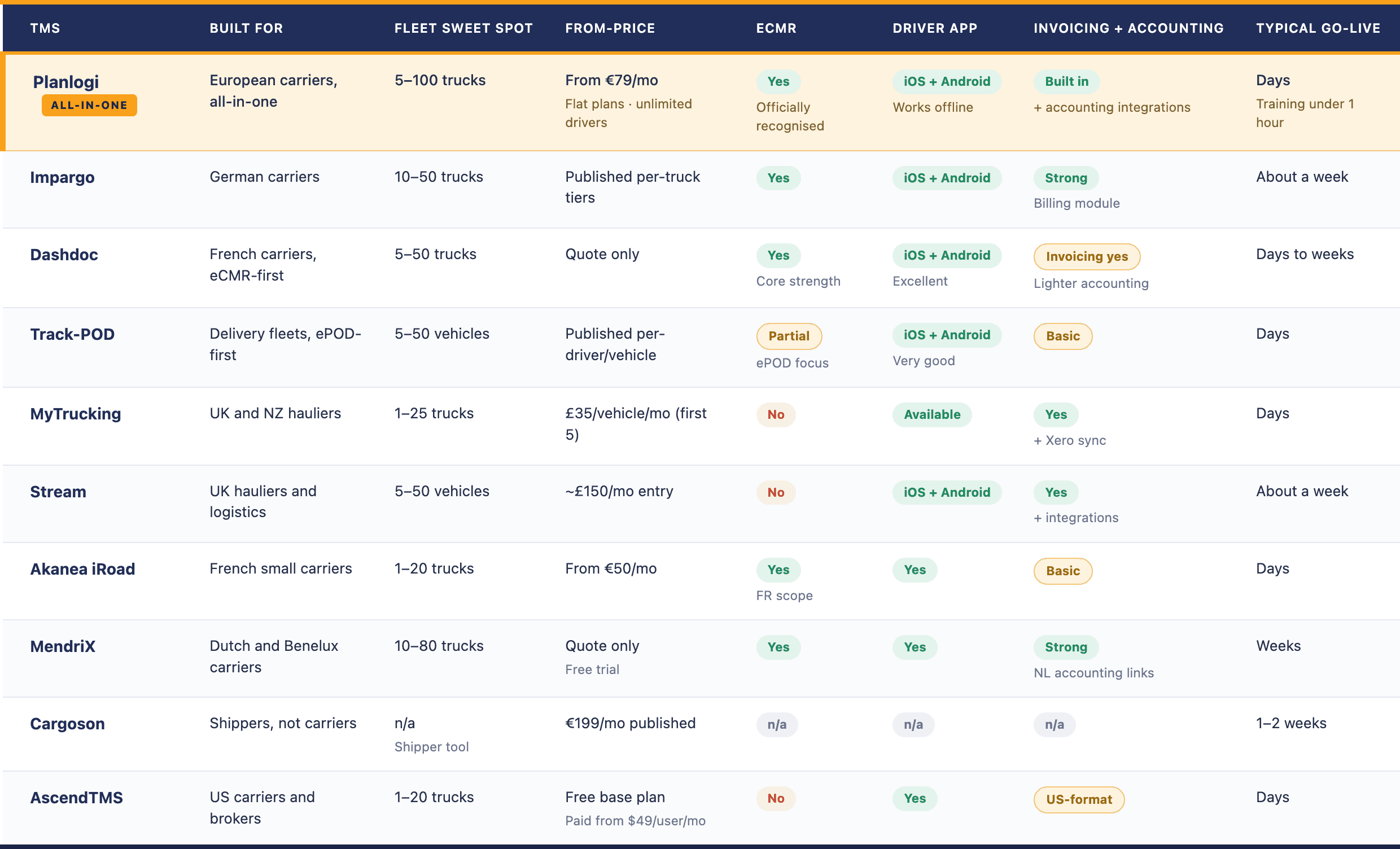
Here’s a quick snapshot of the 10 best TMS software options for European carriers. We compared them on the things small fleets actually shortlist on: who the tool is really built for, the fleet size where it works best, what it costs (if pricing is available online), whether it handles eCMR ahead of the 2027 deadline, how easy-to-use the driver app is, whether invoicing flows into your accounting, and how long it takes to go live.
How we evaluated the best TMS software
We assessed each platform on seven criteria, weighted for how a small carrier actually buys.
Carrier fit first: the tool must serve the people who own and run trucks, not shippers buying freight or couriers delivering parcels. Then pricing transparency, because in our research more than 80 percent of TMS vendors hide their prices behind a sales call, and we believe it’s important to be transparent. Then implementation speed, driver app quality, eCMR and eFTI readiness ahead of the EU’s July 2027 enforcement date, accounting integration, and small-fleet economics, meaning the maths still works at 7 trucks, not just at 70.
Our evidence base: vendor websites and published price lists, verified user reviews on Gartner Peer Insights, G2 and Capterra, and our own experience onboarding more than 100 European carriers in the last year onto a TMS, with everything that taught us about what makes a rollout succeed or quietly die.
One more thing before we dig deeper into the list. The real competitor of every tool here is not another tool. It is the spreadsheet you already have. So for each platform we answer the question that actually matters: will this make Monday morning easier than Excel does?
1. Planlogi: best all-in-one TMS for European carriers with 5 to 100 trucks
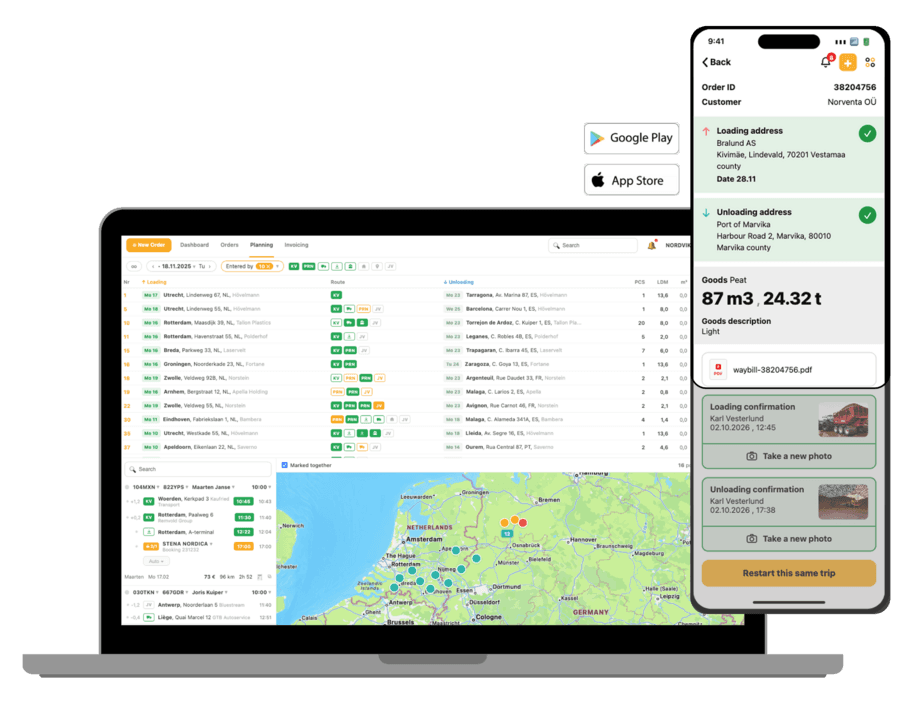
Planlogi is built around one idea: a transport order should flow from booking to invoice without anyone retyping it. An order comes in, the dispatcher drags it onto a trip, the driver sees it in the app, the eCMR and proof of delivery happen on the phone at the ramp, and the invoice is ready the moment the goods are delivered. One flow, one system, no double entry.
Best for: carriers running 5 to 100 trucks anywhere in Europe, especially international and groupage work, who want dispatch, eCMR, driver app, ePOD and invoicing in one system instead of four.
Pricing: from €79/month depending on order volume.
Strengths:
Genuinely fast to start. Training takes under an hour and most companies go live within days, not months. Hauliers we onboard tell us this was the thing they feared most and the thing that surprised them most.
An officially recognised eCMR platform, which matters more every month as the EU eFTI Regulation moves toward full enforcement on 9 July 2027.
The driver app runs on iOS and Android, and is simple enough that drivers actually use it, which is the difference between a TMS that works and one that gets abandoned.
Where it falls short: if you need warehouse management, deep freight exchange procurement, or you operate mainly outside Europe, Planlogi is not built for you. And if you are a 200-truck enterprise with an IT team and a six-month tender process, you will want something heavier.
Proof instead of promises: Tarvi Transport, a three-truck groupage carrier running scheduled line-haul between Estonia and Finland with around 40 stops per run, moved from a paper notebook to Planlogi. They now handle 25 percent more jobs per week and save roughly 250 hours of invoicing time a year, with one planner running the whole operation. ML Transport, a ten-truck part-load carrier on the same Estonia–Finland lane, made the switch from notebook to Planlogi in a week and now builds a load plan in 2 minutes instead of 20.
Bottom line: for a small European carrier that wants everything in one place and wants it working this week, Planlogi is the strongest fit on this list. That is exactly the niche it was built for.
2. Impargo: best for German carriers
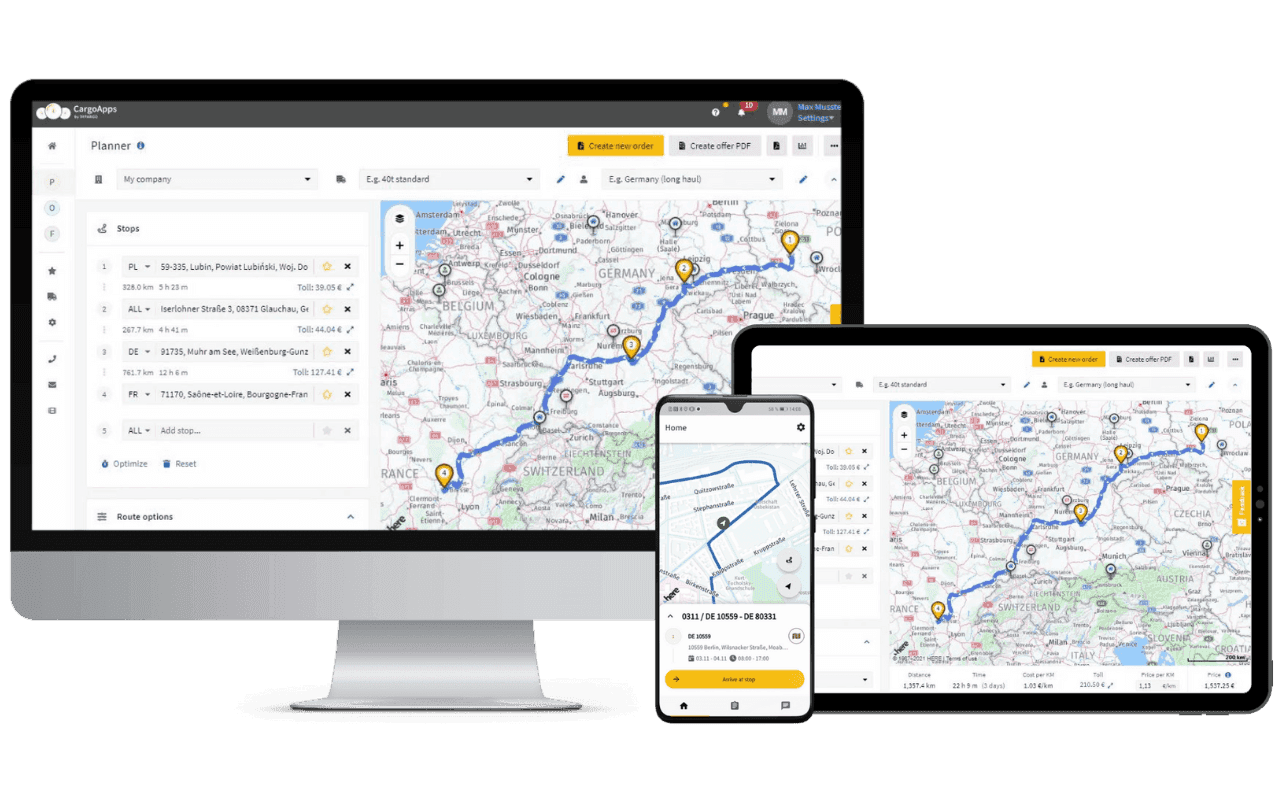
Impargo is a Berlin-built TMS for road carriers, and it has become one of the most credible options for the German Mittelstand fleet. Its billing module is particularly strong, and its pricing is published, which we respect.
Best for: German carriers with 10 to 50 trucks who want truck-specific route planning with toll calculation and a clean path from tour to invoice.
Strengths: transparent pricing, strong billing workflows, solid truck routing with German toll data, German-language support that German dispatchers actually want.
Where it falls short: the experience is strongest in German language and in Germany. Carriers working heavily cross-border in other languages, or wanting deeper document workflows, may find the edges. Reviews also note the all-in-one ambition is newer than the routing core.
Bottom line: if your operation lives mostly inside Germany, shortlist Impargo. If it comes down to these two, we have put Planlogi vs Impargo feature by feature, with monthly prices at 3, 10 and 30 trucks, on one page.
3. Dashdoc: best eCMR-first option for French carriers
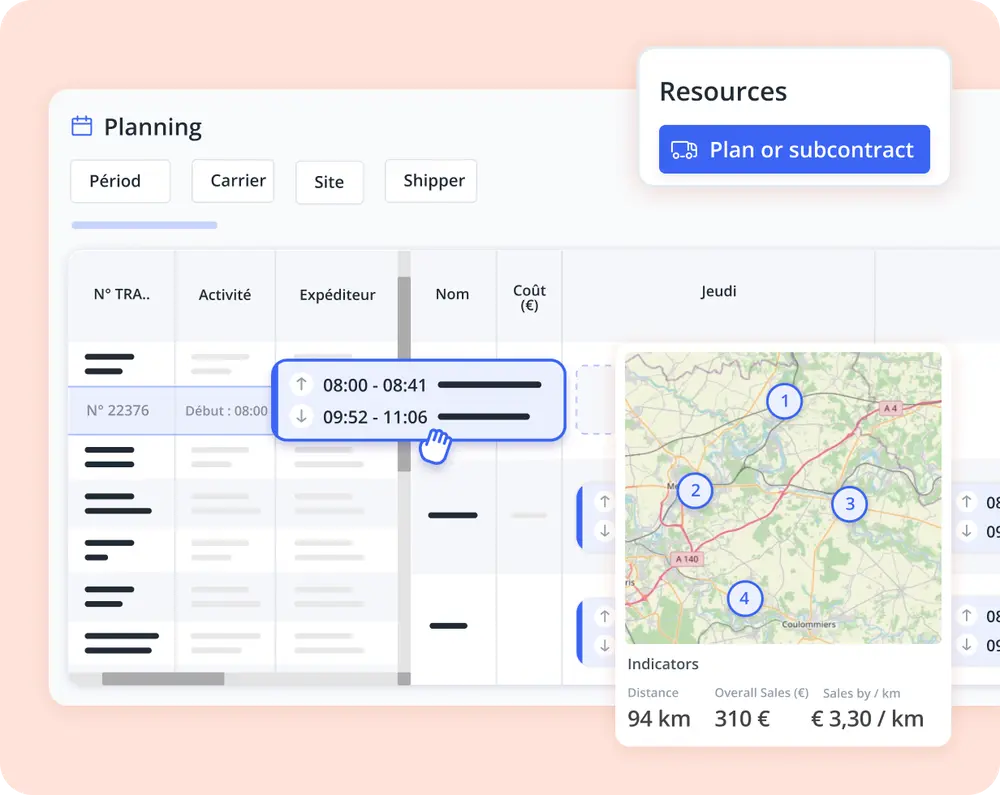
Dashdoc came at the TMS problem from the document side: digitise the consignment note first, then grow into planning and invoicing. French carriers praise its price, ease of use and speed, and its mobile app is among the best in the category.
Best for: French carriers with 5 to 50 trucks where eCMR adoption is the immediate pain, with TMS features growing around it.
Strengths: excellent eCMR and mobile experience, modern interface, fast onboarding, strong momentum in France and Benelux.
Where it falls short: pricing is quote-only. The further you move from documents toward full dispatch-to-accounting workflows, the more you may need to supplement it. Less present outside French-speaking markets.
Bottom line: the strongest document-first choice for French fleets.
4. Track-POD: best if proof of delivery is your core need
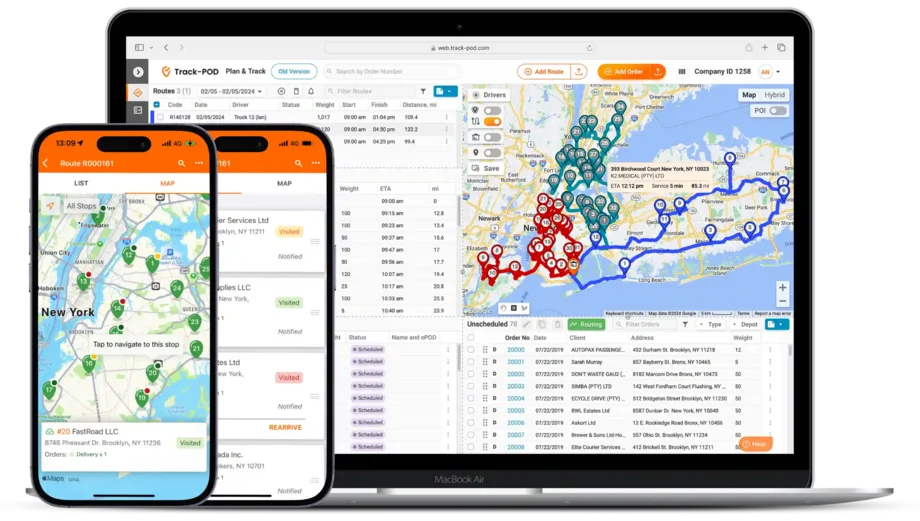
Track-POD is a last-mile software that features paperless proof of delivery with signatures, photos and GPS stamps, plus route planning and a solid driver app, at published per-driver prices.
Best for: delivery-oriented fleets of 5 to 50 vehicles whose number one problem is disputed deliveries and missing PODs rather than full transport management.
Strengths: mature, well-reviewed ePOD, published pricing, quick setup, good API.
Where it falls short: it is not a carrier TMS. Dispatching trucks, managing subcontractors, generating transport invoices with fuel surcharges and sending them to your accountant: that full flow is not what Track-POD is for. Carriers often run it alongside another system, which brings back the double-entry problem. If you want the ePOD workflow inside one carrier system, that is a different architecture.
Bottom line: best-in-class ePOD point solution; just know that is what you are buying.
5. MyTrucking: best simple option for UK hauliers
MyTrucking is a TMS from New Zealand with a growing UK haulier base. Its pitch is simplicity for family-run fleets, and its pricing is clear: £35 per vehicle per month for the first five vehicles, £20 thereafter.
Best for: UK hauliers with 1 to 25 trucks moving off paper diaries and whiteboards for the first time.
Strengths: very easy to learn, transparent per-vehicle pricing, Xero and accounting sync, well liked by small family firms.
Where it falls short: no eCMR, which matters if you run into continental Europe, and lighter on the international, multi-language, multi-currency realities of EU cross-border work.
Bottom line: a fine first TMS for domestic UK work; check the eCMR gap before committing if Europe is in your plans.
6. Stream: solid UK all-rounder
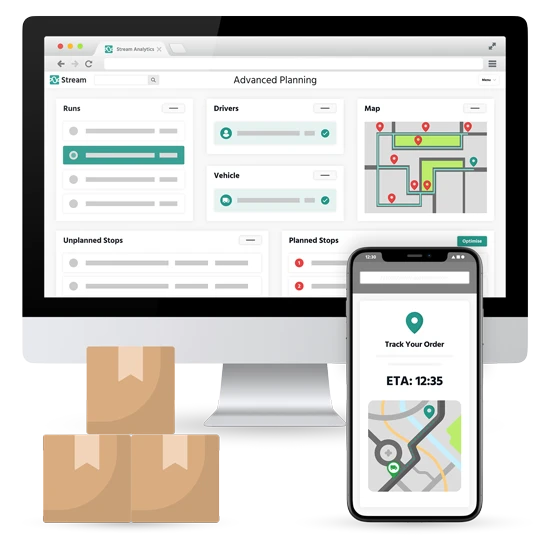
Stream covers logistics and delivery management for UK fleets with a practical feature set: planning, tracking, ePOD, vehicle checks and integrations, with entry pricing around £150 per month.
Best for: UK operations with 5 to 50 vehicles wanting delivery management plus compliance extras like walkaround checks.
Strengths: transparent pricing, broad UK-focused feature set, decent integrations.
Where it falls short: UK-centric by design; no eCMR; less suited to continental haulage patterns like groupage with consignment-note workflows.
Bottom line: a sensible UK shortlist entry alongside MyTrucking.
7. Akanea iRoad: lowest entry price for French small fleets
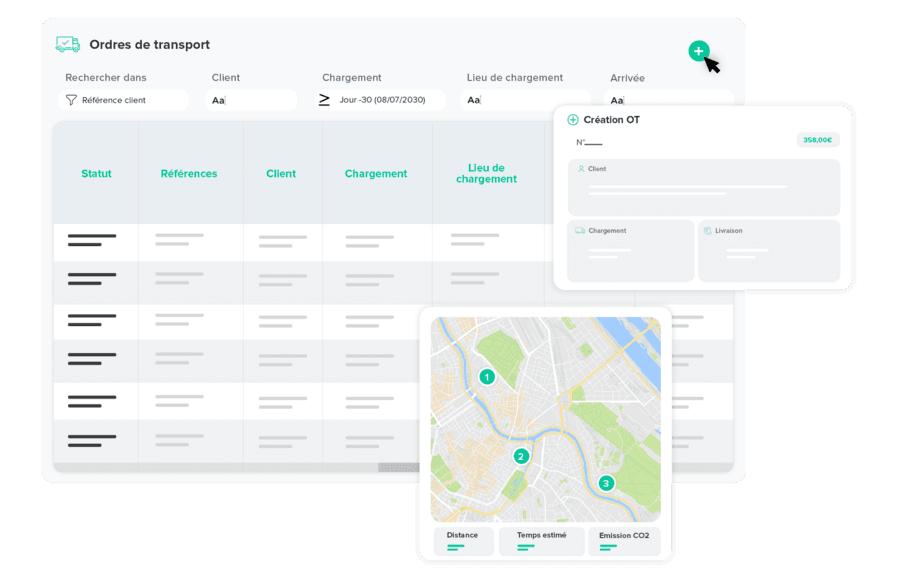
Akanea is a French logistics software house, and iRoad is its light TMS for small carriers, with entry pricing from about €50 per month, among the lowest published prices in the category.
Best for: French carriers with 1 to 20 trucks needing core dispatch and document basics in French at minimal cost.
Strengths: low entry price, French regulatory fit, the backing of an established vendor with deeper products to grow into.
Where it falls short: scope is intentionally light, the experience is French-first, and growing fleets may hit the ceiling and face a migration to a bigger Akanea product sooner than they would like.
Bottom line: the budget option for small French fleets.
8. MendriX: Benelux mid-market favourite
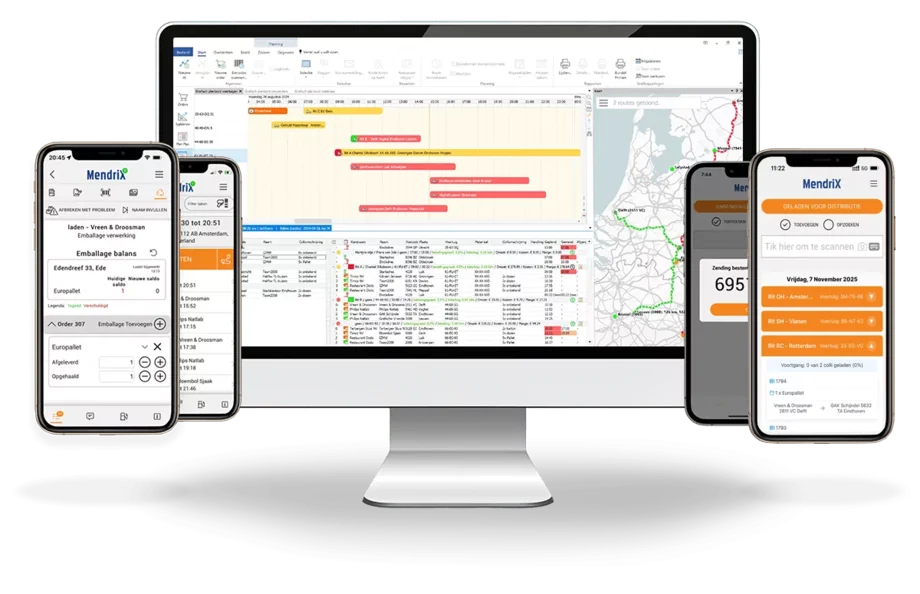
MendriX is a Dutch TMS with a customer base among Benelux carriers, covering planning, fleet, documents and finance with strong links into Dutch accounting practice. Users self-report very high ease-of-use scores, and there is a free trial, which remains rare in this market.
Best for: Dutch and Belgian carriers from about 10 to 80 trucks wanting a proven local system.
Strengths: mature feature set, good local accounting connections, free trial, strong Benelux reputation.
Where it falls short: quote-only pricing, longer implementations than the lightweight tools, and limited presence outside Benelux.
Bottom line: a strong regional choice if you operate where MendriX is at home.
9. Cargoson: excellent software, but for shippers, not carriers
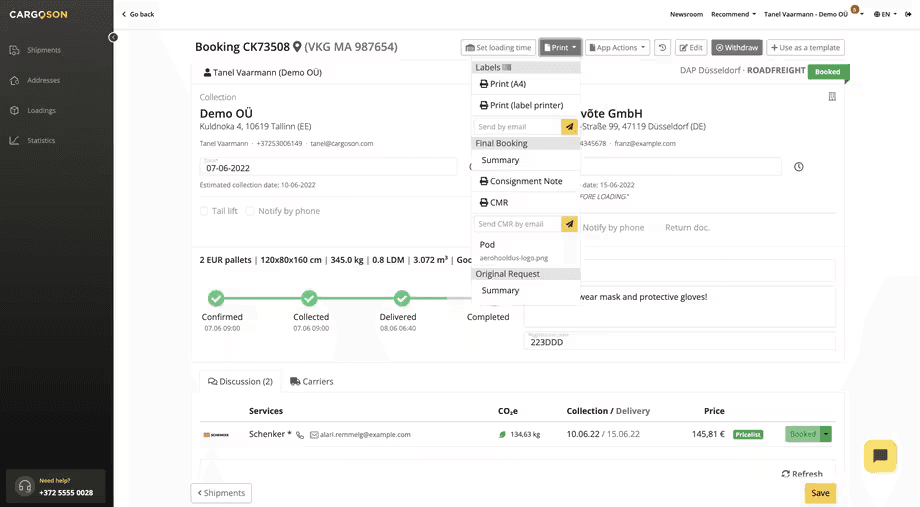
This entry is here to save you an expensive misunderstanding.
Cargoson is a well-built platform with published pricing from €199 per month and over 1,000 carrier integrations. It is genuinely good at what it does. But what it does is help shippers, meaning manufacturers, wholesalers and retailers who buy transport, compare carriers, book freight and track it.
If you own the trucks, you are the carrier. You do not need software for buying transport; you need software for running it: dispatch, driver management, eCMR, proof of delivery, invoicing your customers. That is a carrier TMS, and it is a different product category, even though both get called “TMS” in search results.
Bottom line: if you are a shipper who landed on this page, Cargoson deserves your shortlist. If you are a carrier, keep reading the rest of this list, and treat any “TMS” that talks mostly about rate shopping as a signal it was not built for you.
10. AscendTMS: the free option, with honest caveats
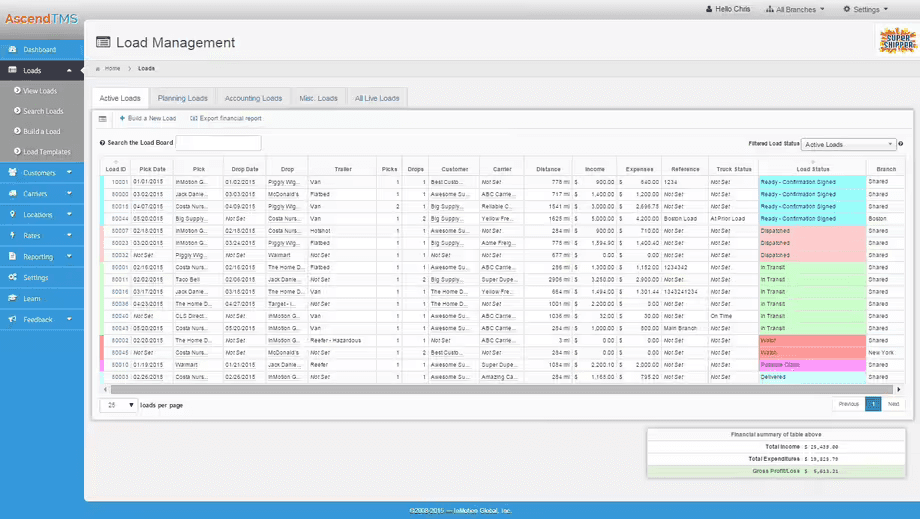
AscendTMS is the answer to a question many owner-operators ask: is there a free TMS? Yes. AscendTMS has a genuinely free base plan, with paid plans from $49 per user per month, and it is popular with one-truck and small US operations.
Best for: a solo European operator who wants to try digital workflows at zero cost before committing anywhere.
Strengths: free to start, quick signup, established product with a large user base.
Where it falls short: it is built for the US market. No eCMR, no eFTI path, US-format documents and workflows, imperial units and dollar-first assumptions throughout. For European compliance work you will outgrow it the day a customer or a roadside check asks for an electronic consignment note.
Bottom line: a fine free sandbox; not a system to build a European transport business on.
Best TMS software by situation: quick answers
Best overall for European carriers (5 to 100 trucks): Planlogi, for the complete order-to-invoice flow, recognised eCMR and published pricing.
Best for Germany: Impargo. See how Impargo compares with Planlogi at 10 and 30 trucks before you decide.
Best for France: Dashdoc for eCMR-first digitisation; Akanea iRoad on a tight budget.
Best for UK domestic haulage: MyTrucking for simplicity; Stream for a broader feature set.
Best for Benelux: MendriX.
Best ePOD point solution: Track-POD.
Best free TMS: AscendTMS, with the European compliance caveats above.
Best for owner-operators with 1 to 3 trucks: Planlogi’s entry tier if you want to grow into a full system; AscendTMS if you only want to experiment for free.
If you are a shipper, not a carrier: Cargoson.
Choosing a TMS is a big step for a small company. Take it at your own pace. If you want to see how the order-to-invoice flow looks with your own trucks and routes, book a 30-minute demo and we’ll show you.
The five fears that stall every TMS decision
In more than a 100 customer onboardings last year, we have learned that small carriers rarely lose sleep over feature lists. They lose sleep over five specific fears. Every one of them is reasonable, and every one of them can be tested before you sign anything.
“My drivers will not use it.”
If drivers reject the app, the whole system collapses back into phone calls.
What to test in the TMS demo: can a driver complete a delivery confirmation in two taps? Does the app work offline in a basement loading bay and sync later? Is the interface available in the languages your drivers actually speak? Does it run properly on both iOS and Android, including the older phones in your fleet? Ask the vendor to show you, on a phone, not a slide.
“Implementation will eat months we do not have.”
Enterprise TMS projects genuinely do take months, and that reputation scares small fleets away from tools that would take them days.
The question to ask every vendor: what happens between signing and my first live truck, and how long does it take with a company my size? Then ask what training costs. Unlimited free training is the right answer; per-session charges on top of a subscription are a warning sign.
For context, hauliers interviewed about their TMS purchases consistently rank “simple and user-friendly” as the deciding factor, ahead of any individual feature.
“I don’t even know the actual price of the TMS software.”
More than 80 percent of TMS vendors require a sales call to learn what their software costs. You can read that as standard B2B practice, or you can read it as a preview of the relationship: if finding the price is this hard, what will support requests be like?
Vendors who publish prices, several of which are on this list, are making a bet on trust. Planlogi and Impargo both publish theirs, which is why we could show them side by side on the same billing terms.
“The transition will mean double work and lost data.”
Somebody has to keep invoices going out while the new system spins up. What a sane migration looks like: customers, vehicles and standing orders imported by the vendor before go-live, a short parallel period measured in days, and accounting integration tested with real invoices before you switch off the old way.
If a vendor cannot describe that plan in plain words, they have not done it often.
“We will pay for features we never use.”
The classic complaint about heavyweight systems is using 20 percent of the features while paying for all of them. The defence is right-sizing: choose a system whose entry tier matches your fleet today, and confirm the upgrade path is a settings change, not a new contract negotiation. A 7-truck firm does not need multi-depot analytics; it needs orders, trips, drivers, documents and invoices to flow.
If you take one thing from this section: doing nothing also has a price. It is just paid in evenings, weekends, lost CMRs and invoices that go out two weeks late. The spreadsheet does not send you a monthly bill, which is exactly why its cost is so easy to ignore.
What changes in 2026 and 2027 for European road hauliers
For years, digitising transport documents was a nice-to-have. The EU has now put dates on it.
Under the eFTI Regulation (EU) 2020/1056, authorities across the EU must be able to accept freight transport information electronically, with full application from 9 July 2027. Certified platforms and national systems are being prepared now, and the European Commission estimates the shift to paperless freight could save the sector up to €1 billion per year. Country-by-country eCMR readiness already varies widely; you can check the current implementation status of every member state on the eFTI and eCMR status map.
For a small carrier, this changes the buying question. It is no longer only “will a TMS save us time?” but “will the system we choose handle electronic consignment notes when our customers, and roadside inspections, expect them?” An eCMR cuts the administration on a transport document by roughly half, and unlike most efficiency claims, this one comes with a regulatory deadline attached.
It lands in a hard market, too. European carriers are squeezed from both sides: Transport Intelligence’s European Road Freight 2026 outlook points to rising costs against soft demand, and the IRU counts over 400,000 unfilled truck driver positions in Europe, with around one in eight driver seats empty. When you cannot hire your way out, the only lever left is making the trucks and people you have more productive. That, more than any feature list, is the actual case for a TMS in 2026.
Before you shortlist, ask every vendor one question: are you a recognised eCMR platform, and what is your eFTI plan for July 2027? The answers will sort the list quickly. (Planlogi’s answer is yes, and the full picture is in our eCMR and eFTI 2027 guide.)
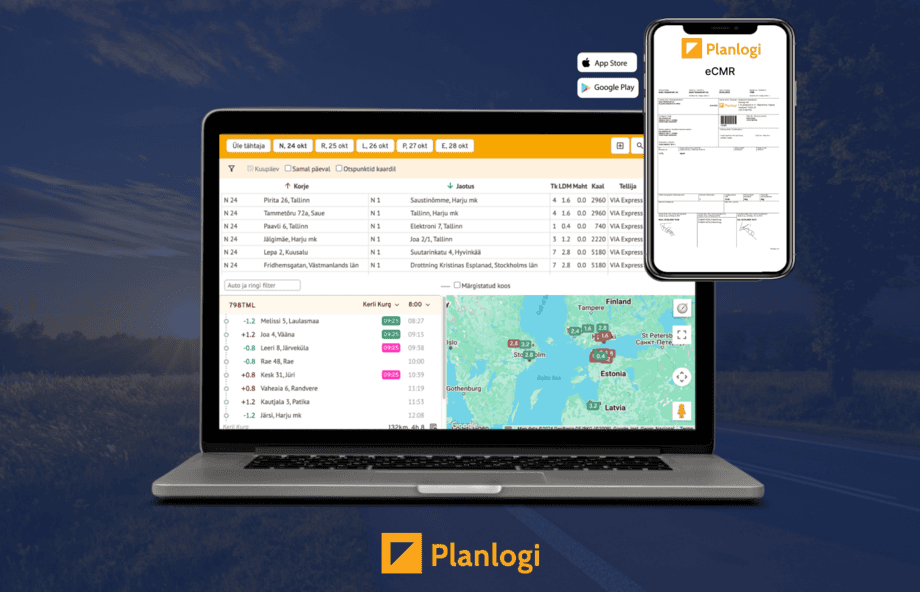
Planlogi is a carrier-side EFTI-compliant TMS built specifically for European hauliers in the 5-100 truck range.
Our eCMR module auto-generates eCMRs, supports eIDAS-compliant signatures and exports to the eFTI common data set. The platform is designed so that a dispatcher can plan a route, a driver can sign a delivery on a tablet, and the accounting integration can raise an invoice from the same record.
If you want to see how that looks in practice, you can book a thirty-minute walkthrough.
Frequently asked questions
What is the best TMS software for a small trucking company in Europe?
For European carriers running 5 to 100 trucks, Planlogi is the strongest all-in-one option: dispatch, eCMR, driver app, proof of delivery and invoicing in one system, with published pricing from €79 per month and go-live within days. Strong regional alternatives include Impargo in Germany, Dashdoc in France, MyTrucking and Stream in the UK, and MendriX in Benelux.
How much does TMS software cost for a small carrier?
Published entry prices range from free (AscendTMS base plan) to around €50 per month (Akanea iRoad), £35 per vehicle (MyTrucking) and from €79 per month for Planlogi (flat plans based on order volume, unlimited drivers). Most vendors price per dispatcher, driver or vehicle, so cost scales with fleet size. More than 80 percent of TMS vendors hide pricing behind a sales call; vendors who publish prices openly, like Planlogi, are easier to budget for and signal a more transparent relationship. For a worked cost example, Planlogi vs Impargo, including the per-dispatcher and per-driver fees, see our comparison.
Will my drivers actually use a TMS driver app?
They will if the app is simpler than paper. Look for two-tap delivery confirmation, offline mode for loading bays without signal, support for both iOS and Android, and an interface in the languages your drivers speak. Planlogi’s driver app was designed around these requirements, which is why fleets like Tarvi Transport, whose drivers handle around 40 stops per run, adopted it without resistance. Always ask the vendor to demo the app on a real phone before you sign.
How long does it take to implement a TMS for a small fleet?
It ranges from days to months, and this is the biggest difference between small-fleet and enterprise systems. Planlogi onboardings typically complete within days, with training under one hour. Lightweight tools like MyTrucking and Track-POD are similar. Mid-market systems take weeks and enterprise platforms take months. Ask every vendor what happens between signing and your first live truck, and confirm training is free and unlimited.
Do I need a TMS for 5 trucks, or is Excel enough?
Excel works until the second dispatcher arrives, a customer demands live tracking or digital PODs, or the owner is spending 20 or more hours a week on admin. If orders still fit in one person’s head, keep your money. If you recognise those symptoms, a small-fleet TMS typically pays for itself within a few months. Planlogi customers report 8 to 20 hours saved per week per dispatcher, and Tarvi Transport now runs 25 percent more jobs with the same team.
Which TMS platforms are ready for the 2027 eCMR and eFTI requirements?
From 9 July 2027, EU authorities must accept electronic freight transport information under Regulation (EU) 2020/1056. Planlogi is an officially recognised eCMR platform, and Dashdoc and Impargo also have clear eCMR positions. UK-focused tools like MyTrucking and Stream, and US-built tools like AscendTMS, do not support eCMR. If you run cross-border EU transport, make recognised eCMR support a hard requirement on your shortlist.
What is the difference between a carrier TMS and a shipper TMS?
A carrier TMS is for companies that operate trucks: it handles dispatching, driver apps, eCMR, proof of delivery and invoicing your customers. A shipper TMS is for companies that buy transport: it compares carrier rates, books freight and tracks shipments. Planlogi, Impargo and Dashdoc are carrier TMS platforms; Cargoson is a shipper TMS. If you own the trucks, choose a carrier TMS, even though search results often mix the two categories.
Does TMS software integrate with accounting software, or will my bookkeeper face double entry?
The good systems remove double entry entirely. Planlogi builds the invoice automatically from delivered orders, including fuel surcharges and agreed price lists, and connects to the accounting systems used in its markets, so data arrives complete instead of being retyped. MyTrucking syncs with Xero. Whichever TMS you choose, test the accounting integration with real invoices before going live; it is the feature your finance person will judge the whole system by.


